

On this page 25 sections
- Why Traditional Hiring Is Failing Your Hospitality Team
- Moving Beyond the Resume
- A Balanced View on Personality Assessments
- What Do Personality Tests Actually Measure?
- Common Frameworks Used in Hiring
- Turning Traits into Hospitality Success
- Do Personality Tests Really Predict Job Success?
- The Critical Issue of Bias and Validity
- A Tool, Not a Verdict
- Navigating the Legal and Ethical Risks
- Avoiding Discrimination and Adverse Impact
- Meeting ADA and Privacy Obligations
- A Practical Framework for Hiring in Hospitality
- Step One: Define Essential Role Traits
- Step Two: Select a Validated Test
- Step Three: Integrate the Test Strategically
- Step Four: Use Results to Deepen Interviews
- Role-Trait Mapping for Hospitality Positions
- Putting It All Together with MAJC
- From Knowledge to Action
- Build a Culture People Do Not Want to Leave
- Common Questions About Personality Tests
- Can Candidates Fake a Personality Test?
- What Is the Best Personality Test for Restaurant Staff?
- Are Personality Tests Too Expensive for a Small Business?
High turnover is a constant battle for hospitality operators. It makes building a strong, consistent team feel nearly impossible. While a resume shows you what a candidate has done, it rarely reveals if they have the resilience and guest-first mindset to thrive when things get busy.
This is where personality tests for hiring come in, offering a much deeper look into a candidate's inherent traits and how they're likely to act on the floor.
Why Traditional Hiring Is Failing Your Hospitality Team
Resumes and interviews tell you what a candidate can do, but they often fail to predict what they will do under pressure. In a business where a single bad interaction can lose a guest for good, that gap is a huge problem.
Traditional hiring methods tend to glide right over crucial soft skills like empathy, stress tolerance, and teamwork, leading to hires who might be technically skilled but are a terrible fit for the culture.
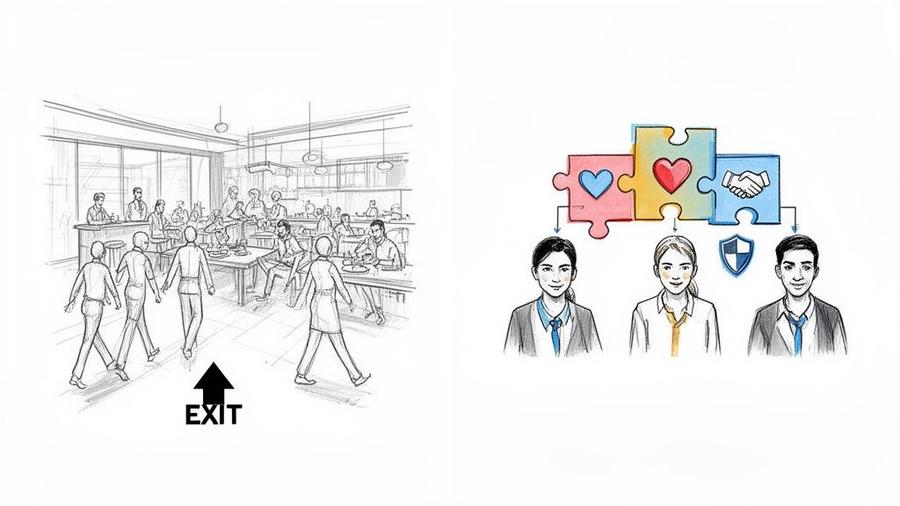
The clearest sign that old-school hiring is not working is persistent staff turnover. Learning how to reduce staff turnover is essential, as the constant churn drains resources, tanks morale, and shatters the consistent service your regulars expect.
Moving Beyond the Resume
Personality tests give you a structured way to measure the behavioral traits that actually predict success in hospitality. Think of them not as a magic bullet, but as a strategic tool for building a more resilient, guest-focused team. They provide data-driven insights that help you see past a polished resume and a charming interview.
For instance, you can spot candidates who are naturally:
- Conscientious and detail-oriented, perfect for making sure rooms are spotless or orders are exactly right.
- Agreeable and empathetic, making them ideal for front-of-house roles where guest satisfaction is everything.
- Emotionally stable, allowing them to handle the controlled chaos of a busy kitchen or front desk without cracking.
This is not just theory; it is a practice that is gaining ground. A recent Society for Human Resource Management survey found that 32% of HR professionals now use personality tests when making hiring decisions. Data-savvy operators are realizing their value.
A Balanced View on Personality Assessments
Of course, these tools are not without their complexities. Choosing the right test, interpreting the results correctly, and staying on the right side of the law are all critical. This guide is built to give you practical, operator-focused advice to help you weave these assessments into your hiring strategy effectively.
But first, let's start with a clear, balanced look at the pros and cons.
Personality Tests in Hiring At a Glance
Here’s a quick summary of the primary benefits and potential drawbacks of using personality assessments in your recruitment process.
As you can see, the key is in the execution. When used thoughtfully, these assessments can be an incredible asset. When used carelessly, they can create more problems than they solve.
What Do Personality Tests Actually Measure?
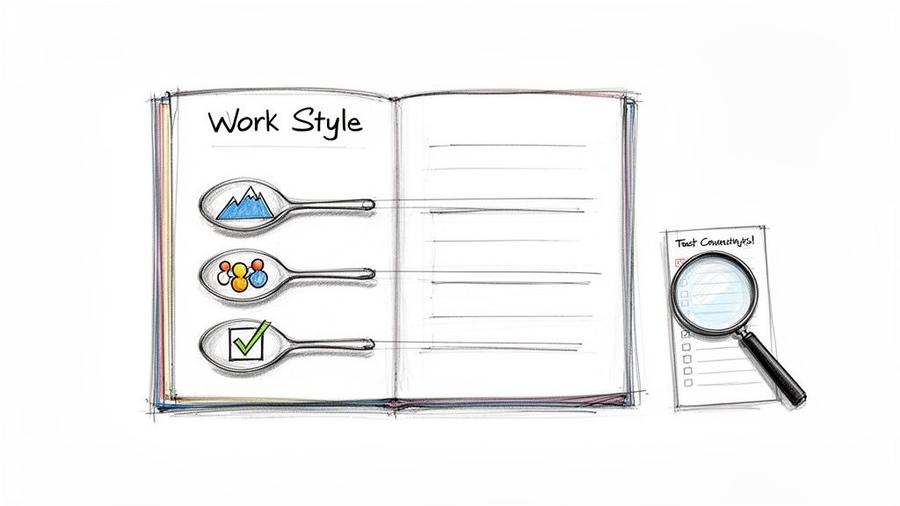
When you use a personality test in hiring, you’re not trying to read someone’s mind. Think of it more like getting a look at the recipe for their natural work style. It shows you the core ingredients like resilience, communication habits, and how they approach teamwork, but it does not predict the final dish. That’s their actual on-the-job performance.
The goal here is simply to understand a candidate's natural tendencies, not to slap a label on them.
These assessments give you a structured way to talk about behavioral traits that are otherwise tough to pin down in a normal interview. Instead of just a "gut feeling" that someone is a team player, a well-designed test can offer data suggesting they score high in agreeableness or collaboration. This gives you a much more objective place to start a real conversation.
Common Frameworks Used in Hiring
Plenty of personality quizzes are floating around online, but the professional-grade assessments used in hiring are almost always built on established psychological frameworks. They move beyond simple typecasting to provide scientifically validated insights into a person's behavioral patterns.
Understanding the basics of these models helps you make sense of the results.
Two of the most respected and widely used frameworks in the hiring world are the Big Five (often called OCEAN) and DiSC. Each offers a different lens for viewing a candidate's personality.
- The Big Five (OCEAN): This is the gold standard in personality psychology. It assesses five broad dimensions of personality that hold up consistently across different cultures and demographics.
- DiSC: This framework is more focused on observable behaviors and communication styles, which makes it especially useful for figuring out how a new hire might click with your existing team.
Remember, these tools are not about finding a "perfect" personality. They're about aligning a candidate's natural inclinations with the real demands of the role. For a deeper dive into what these tests cover and the insights they can uncover beyond a résumé, check out this guide on pre-employment behavioral assessments.
Turning Traits into Hospitality Success
Knowing a candidate’s traits is one thing. Understanding how they translate to a bustling restaurant or hotel is another. Let's break down what these abstract concepts actually look like in a real hospitality setting, using the Big Five model as an example.
The Five-Factor Model (OCEAN):
- Openness to Experience: How curious, creative, and open-minded is someone? A chef with high openness might be fantastic at dreaming up new menu items.
- Conscientiousness: Does this person show self-discipline, organization, and a focus on getting things done right? This is a non-negotiable trait for roles that demand attention to detail, like a night auditor or a line cook handling food safety.
- Extraversion: Where does this person get their energy, from interacting with others or from quiet solitude? High extraversion is often a strong signal of success for front-desk agents and servers who thrive on guest interaction.
- Agreeableness: How cooperative, empathetic, and trusting is the individual? An agreeable team member is crucial for keeping the peace in a busy kitchen and delivering compassionate service to guests.
- Neuroticism (or Emotional Stability): How resilient is someone under pressure? A front-of-house manager with high emotional stability can handle a guest complaint calmly and professionally, turning a bad situation around.
By mapping these traits to the specific needs of a job, you build a much more complete picture of a candidate. This thinking should start long before you even post the job, right when you're defining the role itself. You can learn more about how to do that in our guide on how to write a job description.
Ultimately, understanding what these personality tests measure allows you to move beyond buzzwords and use the results to have meaningful conversations that reveal a person's true potential.
Do Personality Tests Really Predict Job Success?
This is the million-dollar question for any operator thinking about adding personality tests to their hiring process. Do they actually tell you who will kill it on the floor and who will struggle? The answer is not a simple yes or no. It’s more like, “it depends entirely on how you use them.”
Scientifically validated tests, when used correctly, can be a decent predictor of job performance. They’re not a crystal ball, but they offer data points that go way beyond a resume. Think of it like a weather forecast. It does not guarantee rain, but it gives you a strong enough signal to decide whether to bring an umbrella.
In the same way, a well-designed assessment can hint at a candidate's potential, especially in roles where certain traits are make-or-break. For a front desk agent, high scores in agreeableness and emotional stability are a great sign. For a kitchen manager, high conscientiousness points to the kind of attention to detail needed to run a tight ship.
The market for personality tests in recruitment was recently valued at around USD 1.2 billion in North America alone. It's projected to hit USD 3.5 billion worldwide by 2033, which tells you a lot about the direction the industry is heading.
The Critical Issue of Bias and Validity
Here’s where things get tricky. The effectiveness of any personality test completely falls apart if the tool itself is flawed or biased. This is where a lot of businesses get into trouble, especially when they grab a generic online quiz that was never built for screening employees.
These unvalidated tests can be riddled with bias related to culture, gender, and neurodiversity. A test designed around one specific cultural norm might accidentally penalize fantastic candidates from different backgrounds. For example, a question that rewards outspokenness might filter out an incredible candidate from a culture where quiet diligence is the mark of a star performer.
The biggest risk in using personality tests is not the tool itself; it is the temptation to use a bad one as a shortcut. A generic online quiz can screen out your most innovative, diverse, and capable candidates before you ever get a chance to talk to them.
Many of the popular free tests you see online, like 16Personalities, are designed for self-discovery, not hiring.
While they can be fun for personal insight, using them for recruitment is a huge risk. They have not been validated to predict job performance or proven to be free of discriminatory bias in a hiring context.
A Tool, Not a Verdict
This brings us to the most important rule of thumb: a personality test result should never be the final word. Its real power comes from being one piece of a much bigger puzzle. The results should inform your hiring process, not dictate it.
A smart hiring manager uses test results to ask better, more targeted interview questions.
- Low Conscientiousness Score: Instead of tossing the resume, you might ask, "Can you tell me about a time you had to manage multiple competing deadlines? How did you prioritize what to tackle first?"
- Low Extraversion Score for a Server Role: This could lead to a great question like, "Describe your approach to connecting with new guests and making them feel welcome from the moment they sit down."
This approach turns the assessment from a simple pass/fail gate into a launchpad for a much deeper conversation. It gives candidates a chance to add context to their results and show you how their unique style plays out in the real world.
When you combine the data from a solid test with insights from structured interviews, reference checks, and skills assessments, you get a much more reliable, holistic view of each candidate. This strategy is a cornerstone of building stronger, more cohesive hospitality teams. For more on this, check out our guide on how to build high-performing teams.
Navigating the Legal and Ethical Risks
Using a personality test for hiring is not just about finding the right fit, it is about doing it the right way. While these assessments can give you a deeper look at a candidate, they come with real legal and ethical tripwires. If you’re not careful, a poorly chosen test can land you in hot water with compliance issues or even a discrimination claim.
Think of a personality test like a powerful chef's knife. In the right hands, it's a precision tool that helps you create something great. But used incorrectly, it can cause serious damage. The goal is to wield it skillfully, protecting both your business and your candidates.
The two main guardrails you need to understand come from the Equal Employment Opportunity Commission (EEOC) and the Americans with Disabilities Act (ADA). These federal regulations are in place to make sure every part of your hiring process, including testing, is fair and non-discriminatory.
Avoiding Discrimination and Adverse Impact
The single biggest legal risk with personality tests is something called adverse impact. This is when a test, even without any intent to discriminate, ends up filtering out a disproportionate number of people from a protected group like those of a certain race, gender, or age.
For a test to hold up legally under EEOC rules, it has to be two things:
- Job-Related: The traits you're measuring must connect directly to the core duties of the job. You cannot test for "spontaneity" if the role is a highly structured, by-the-book accounting position.
- Business Necessity: You have to be able to show that these traits are absolutely critical for someone to succeed in that specific role.
An assessment is only as fair as its design. Your best defense against unintentional bias is choosing a scientifically validated test built specifically for employment screening. It’s a non-negotiable first step.
This is exactly why grabbing a free quiz off the internet is a terrible idea. Those fun little tests are not validated for hiring and can easily get you into legal trouble by screening people out for reasons that have nothing to do with their ability to actually do the job.
Meeting ADA and Privacy Obligations
The Americans with Disabilities Act (ADA) adds another critical layer you cannot ignore. Some personality tests can stray into territory that makes them a "medical examination," especially if they're designed to diagnose mental health conditions. Giving a test like that before a conditional job offer is a direct violation of the ADA.
To stay on the right side of the line, make sure any test you use for hiring steers clear of disability-related questions or anything that could be used to identify a mental impairment.
Finally, do not forget about candidate privacy. Be upfront about why you’re using an assessment and how you'll use the data. Keep the results secure, and only share them with the people directly involved in the hiring decision. This kind of transparency is not just an ethical nice-to-have; it builds trust with the very people you hope to hire.
A Practical Framework for Hiring in Hospitality
Theory is great, but let's get down to what actually works. Bringing personality tests into your hiring process requires a smart, structured approach, not just slapping another step onto your application. This four-step framework is built for the realities of hotels and restaurants, designed to turn abstract data into a real tool for building stronger, more resilient teams.
The whole process comes down to one core idea: use personality assessments to start better conversations, not to make automatic decisions. This is all about adding a layer of insight that a resume just can not give you.
Step One: Define Essential Role Traits
Before you even look at a single test, you have to define what success actually looks like for the role you're hiring for. The traits that make a line cook thrive are worlds away from what a front desk agent needs. You have to get specific and connect personality directly to the job duties.
For example, you might map it out like this:
- Resilience and Stress Tolerance: This is non-negotiable for a line cook who has to stay calm and execute flawlessly during a chaotic dinner rush.
- Empathy and Agreeableness: Absolutely critical for a front desk agent who needs to connect with guests and gracefully handle complaints.
- Conscientiousness: Essential for a night auditor who manages detailed financial reports and security procedures with precision.
Starting here ensures your entire process is job-related, which is not just good practice, it is a crucial step for legal compliance.
Step Two: Select a Validated Test
Once you know what you’re looking for, it's time to pick a tool that actually measures those specific traits. Steer clear of the free, generic quizzes you find online; they lack the scientific validation needed for fair and legal hiring. Instead, look for assessment providers who design their tests specifically for workplace performance.
When you're vetting a test, ask the provider two simple questions: "Is this assessment validated to predict job performance?" and "Has it been checked for adverse impact against protected groups?" Any reputable company will have this information ready to go. A little due diligence here protects your business and makes sure you’re using a fair, effective tool.
This is not just a niche practice anymore. The Personality Assessment Solution Market was valued at a massive $6.5 billion and is projected to skyrocket to $22.88 billion by 2034. That growth is a clear signal that businesses everywhere are using personality data to hire smarter and keep their best people longer. You can dig into more insights on this market expansion from Global Insight Services.
This infographic breaks down the core principles of a legally sound hiring process, which should guide how you use any assessment tool.
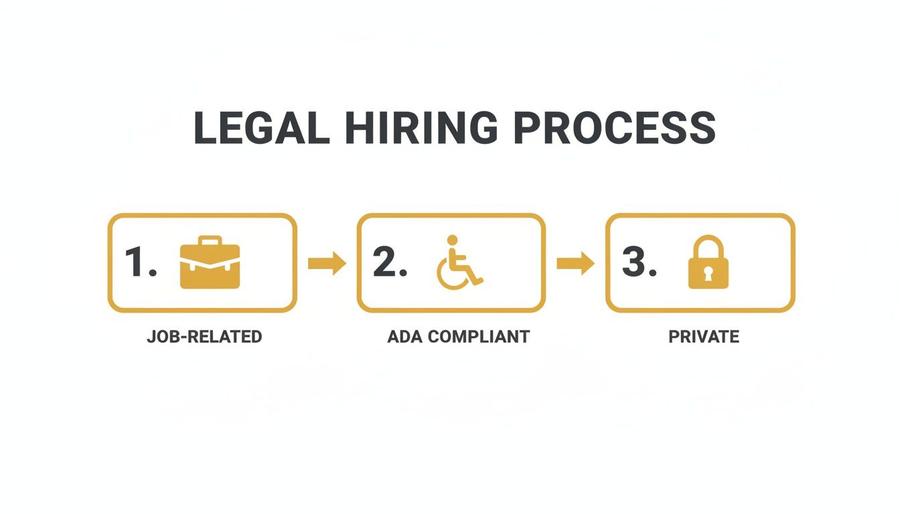
The bottom line is simple: any test you use has to be directly related to the job, compliant with standards like the ADA, and respectful of a candidate’s privacy.
Step Three: Integrate the Test Strategically
Timing is everything. If you ask candidates to take a long assessment right at the start, you risk scaring away great talent before you even get to talk to them. The sweet spot is usually after an initial screening but before the final, in-person interviews.
A solid workflow often looks like this:
- Application and Resume Review: Your first pass for basic qualifications and experience.
- Brief Phone or Video Screen: A quick chat to confirm interest and fundamental skills.
- Personality Assessment: Sent to a smaller, more qualified pool of candidates who made it past the initial screens.
- In-Depth Interview: The final stage, where you can actually discuss the assessment results.
This approach respects everyone's time and ensures you're only investing in deeper assessments for your most promising applicants.
Step Four: Use Results to Deepen Interviews
This is where the magic happens. The real power of personality tests for hiring is not in the score itself, but in how you use it to craft better, more insightful interview questions. The results should be your guide for a deeper conversation, helping you explore potential strengths or areas you need to probe further.
Never use a test result to disqualify someone outright. Think of it as a signpost pointing you toward the questions you need to ask to get the full picture.
For instance, if a chef candidate scores low on "agreeableness," do not just write them off as difficult. Instead, ask a behavioral question like, "Tell me about a time you got some tough constructive feedback on a dish from a colleague or manager. How did you handle it?"
Or if a front-of-house manager candidate scores lower than you'd expect on "extraversion," you could ask, "How do you recharge your energy during a long, busy shift of interacting with guests?" Their answer will tell you far more than the score alone ever could.
This strategy turns raw data into a powerful conversation starter. To help you build out your question bank, check out our guide on the most effective restaurant manager interview questions that can help you dig into these areas.
Role-Trait Mapping for Hospitality Positions
To make this even more practical, here’s a quick-start table mapping common hospitality roles to the traits that often predict success. Use this as a jumping-off point to build your own role profiles.
This kind of mapping ensures you’re not just guessing what good looks like. You’re building a clear, repeatable process for identifying the right people for the right roles, moving beyond gut feelings to make data-informed decisions that build a stronger business.
Putting It All Together with MAJC
Knowing the ins and outs of personality tests is one thing. Actually using them to build a stronger team day in and day out is a whole different ballgame. The takeaway is simple: these assessments are powerful tools, but only when they’re part of a smart, ethical, and legally sound hiring system. This is where theory needs a playbook to become reality.
Let’s be honest, moving from a good idea to a repeatable process takes more than just good intentions. It demands the right resources, clear templates, and a network of peers to lean on. Without a system, even the best strategies fall flat, and you end up right back where you started: guessing.
From Knowledge to Action
This is exactly why we built MAJC. Our whole platform is designed to help hospitality operators turn proven strategies into everyday operational wins. We give you the practical tools you need to build a complete hiring system, one that goes way beyond just a single personality test.
With MAJC, you can:
- Tap into Resource Libraries: Get your hands on operator-tested templates for everything from writing job descriptions that attract the right personalities to building structured interview guides that actually work.
- Lean on Community Insights: Connect with a network of fellow hospitality leaders. You can see what’s working for them, share your own struggles, and get real-world advice on putting new hiring methods into practice.
- Get Expert Guidance: Jump into live workshops and Q&A sessions to go deeper and get straight answers from industry veterans on the specific hiring challenges you're facing right now.
MAJC is the framework that connects all the dots. Instead of just reading about how to define key traits for a role, you can grab a template and start building one in minutes. Rather than wondering what interview questions to ask, you can use our guides to turn assessment data into a truly meaningful conversation.
Build a Culture People Do Not Want to Leave
At the end of the day, using personality tests the right way is part of a much bigger goal: building a workplace where great people want to stick around and grow. When you hire for both skill and fit, you cut down on turnover, supercharge your team chemistry, and foster a culture that shines through in every single guest interaction.
MAJC is your partner in building that kind of sustainable, profitable business. We bring the tools, training, and community support to help you move from simply filling seats to building a genuinely exceptional team.
A great hiring process is the foundation of a great culture. It’s about being intentional from the very first touchpoint to find people who will not only succeed in their roles but also enrich your entire team.
If you’re ready to build a smarter, more effective hiring system that lowers turnover and creates a workplace that thrives, we invite you to join the MAJC community. Let’s build a better future for hospitality, together.
Common Questions About Personality Tests
Even with a solid plan, it’s natural to have questions when you’re adding a new tool to your hiring process. Here are some of the most common ones we hear from hospitality leaders, along with some straightforward answers.
Can Candidates Fake a Personality Test?
Let's be real: yes, a candidate can absolutely try to game the system and present the "perfect" version of themselves. That’s why you should only use assessments that have built-in validity scales. These are designed to flag when someone is answering inconsistently or trying way too hard to look good. It's a critical feature.
But here’s the most important part: the test is never the whole story. You should never, ever make a hiring decision based on a test score alone.
Think of the results as a conversation starter. Use them to build smarter, tougher interview questions. If a test suggests someone might struggle with pressure, ask them to walk you through a specific time they had to handle a chaotic service. It’s a lot harder to fake a real-life story than it is to click a button.
What Is the Best Personality Test for Restaurant Staff?
There is no single "best" test that works for every role in a restaurant or hotel. The right tool depends entirely on what you're hiring for.
- For customer-facing roles like servers or front desk agents, a test measuring the Big Five traits (especially extraversion, agreeableness, and conscientiousness) can be a great fit.
- For high-pressure kitchen jobs, you’re better off with an assessment that hones in on things like stress tolerance, resilience, and teamwork.
Here's the non-negotiable part: only use a test that has been scientifically validated for employment. A quiz designed for self-discovery or a fun online diversion has no place in your hiring process. Using one is a surefire way to introduce bias and put your business at legal risk.
Are Personality Tests Too Expensive for a Small Business?
While some of the big corporate assessment platforms come with a hefty price tag, many providers now offer scalable pricing that works for smaller, independent businesses. But it's crucial to stop thinking of this as an expense and start seeing it as an investment.
What's the real cost of a bad hire? Think about the lost productivity, the wasted training dollars, the time you spend recruiting all over again, and the damage to your team's morale. A study from the Society for Human Resource Management estimates the cost to replace an employee can be as high as six to nine months of their salary.
When you look at it that way, a validated personality test is not a cost center. It’s a tool that can deliver a massive return by helping you cut down on turnover and build a more stable, effective team.
Ready to build a hiring system that goes beyond resumes and reduces turnover for good? MAJC provides the templates, community support, and expert guidance to help you find and keep the best talent. Join our community and start building a more resilient team today. Learn more at https://majc.ai/.