

On this page 27 sections
- Why Smart Restaurant Owners Partner with Recruiters
- Tapping into the Hidden Talent Market
- Avoiding the High Cost of a Bad Hire
- Finding and Vetting Your Ideal Recruiting Partner
- Building Your Shortlist
- Separating Specialists from Generalists
- Red Flags to Watch For
- Decoding Recruiter Fees and Contract Terms
- The Three Main Fee Models
- Recruiter Fee Models at a Glance
- Digging into the Details
- Understanding the Fine Print
- Crucial Questions to Ask Before You Hire a Recruiter
- Questions About Their Process and Sourcing
- Questions That Test Industry-Specific Knowledge
- Questions About Communication and Partnership
- Building a Successful Recruiter Partnership
- Setting the Stage for Success
- Establishing a Communication Rhythm
- Providing Constructive and Actionable Feedback
- Modern Hiring Strategies Beyond the Recruiter
- Building a Talent Ecosystem
- Using Technology for Retention
- Questions We Hear All the Time
- How Much Do Restaurant Recruiters Typically Charge?
- What Is a Realistic Timeframe to Fill a Role?
- Should I Sign an Exclusive Agreement with a Recruiter?
Hiring can feel like a full-time job on its own. It is a relentless cycle of posting ads, sifting through résumés, and endless interviews that pulls you away from the floor, the kitchen, and the thousand other things that actually make your restaurant great.
Working with specialized restaurant industry recruiters is not just about outsourcing a task; it is a strategic shift. It turns hiring from a reactive chore into a proactive advantage.
Why Smart Restaurant Owners Partner with Recruiters
Let’s be real. Filling a crucial role like a General Manager or an Executive Chef is not just about checking boxes on a CV. You are looking for a leader who gets your culture, buys into your vision, and can actually elevate the entire team.
The problem is, the best candidates are rarely looking. They are heads-down, busy making someone else’s restaurant successful. They are what the industry calls passive talent.
Tapping into the Hidden Talent Market
This is where a great recruiter earns their keep. Their real value is in their network—years spent building real relationships with top-tier professionals who are not scrolling job boards. When you hire them, you get instant access to a hidden market of vetted, high-performing leaders who are open to the right opportunity. That is a massive leg up.
The industry is under constant staffing pressure. Consumer demand is surging, but nearly 70% of operators are struggling to fill roles. It is a challenge made even tougher by a staggering 75-80% annual turnover rate. The deck is stacked against us.
Avoiding the High Cost of a Bad Hire
A bad hire costs so much more than a salary. Think about the wasted training hours, the hit to your team's morale, and the damage a weak leader can do to the guest experience. It is a wound that can fester for months.
A skilled recruiter is your first line of defense. They do the deep-dive screenings and background checks to make sure a candidate does not just have the skills, but also aligns with your restaurant’s values. To really get why this matters, it is worth understanding the common pitfalls, like the Top 3 Mistakes Entrepreneurs Make In Hiring.
At the end of the day, working with a recruiter is a strategic investment. It frees you up to focus on operations and growth, knowing your talent pipeline is in expert hands. You are not just filling an empty seat; you are building a stable, high-performing team that will drive your business forward for years.
Finding and Vetting Your Ideal Recruiting Partner
So, you have decided a recruiting partner is the right move. The big question now is: where do you find a great one? Just Googling "restaurant industry recruiters" will spit out a massive list, but the best partners—the ones who really get it—usually come from sources you already trust.
Your professional network is the best place to start, hands down. Reach out to other restaurant owners, GMs, or chefs you respect. A referral from someone who has been in the trenches with a recruiter is worth more than any flashy ad. Ask them who they used, what the experience was really like, and the most important question: would they hire them again?
Building Your Shortlist
Once you have a few names, it is time to do some homework. Think of it as a pre-interview screen before you even get on a call. A recruiter’s digital footprint can tell you almost everything you need to know about their focus and expertise.
A sharp, well-maintained LinkedIn profile is a great place to dig in. You want to see recruiters who are actually part of the conversation—posting about hospitality trends, sharing insights, or celebrating recent placements at restaurants like yours. Do they have recommendations from other operators? That is a huge green light showing they are respected in our world.
As you start evaluating, it also helps to get your head around the different ways agencies operate by understanding various recruitment agency models. Knowing the landscape helps you figure out if their structure is a good fit, whether you are hiring for one key leadership role or building out an entire team.
Separating Specialists from Generalists
This is probably the most critical step. You have to figure out if you are talking to a true hospitality specialist or a generalist who just happens to fill restaurant roles sometimes. A generalist understands hiring. A specialist understands the controlled chaos of a Saturday night service, the delicate balance between BOH and FOH, and the specific grit it takes to be a successful GM.
Here’s how to spot a real specialist:
- Their Placements Tell a Story: Their website or LinkedIn should be a highlight reel of recent placements for roles like Executive Chef, General Manager, Sous Chef, or Director of Ops.
- They Speak Your Language: When you talk, they should know what "farm-to-table," "stages," and "P&L management" mean without you having to explain.
- Their Content is Focused: Their blog, articles, or social media should be all about the restaurant world—its challenges, its people, and its future.
If a recruiter’s profile is a mishmash of placements in tech, finance, and healthcare with one random restaurant manager role, they are a generalist. They might get the job done, but a specialist will almost always have a stronger network and a gut-level understanding of who will actually fit your culture. A great recruiter helps you build the ideal candidate profile, which all starts with the job description. You can get our deep dive on how to write a job description that attracts the right people.
Red Flags to Watch For
While you are doing your research, keep an eye out for a few warning signs. These are the little things that tell you a recruiter might not be the right partner for the long haul.
Be wary of anyone who promises they can fill your role in a couple of days or pushes a one-size-fits-all process. Every restaurant is different. A great recruiter will want to spend real time understanding your unique needs, your culture, and your pain points before they even think about starting a search.
A lack of transparency around their process or fees is another major red flag. A true partner will be an open book about how they work and what you can expect. You are looking for someone who feels less like a vendor and more like an extension of your own leadership team.
Decoding Recruiter Fees and Contract Terms
Let's talk about the money. Navigating the financial side of a partnership with a recruiter can feel tricky, but getting this part right is non-negotiable. If you do not understand the pricing models and contract details, you are setting yourself up for surprises down the road. A clear agreement ensures you can make a confident decision that aligns with your budget and hiring goals.
Recruiter fees are almost always a percentage of the candidate's first-year guaranteed salary. But when and how you pay that fee depends entirely on the type of search agreement you sign.
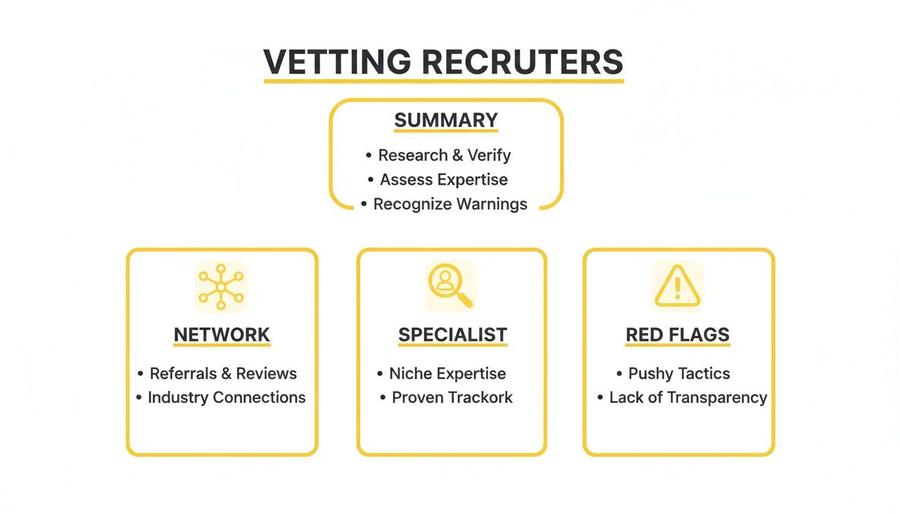
This guide nails the fundamentals: a great recruiter lives and breathes their network. They are a specialist, not a generalist. It also reminds you to watch for critical red flags. Now, let’s connect these ideas to the dollars and cents.
The Three Main Fee Models
Most restaurant industry recruiters operate on one of three primary models: contingency, retained, or container. Each one is built for different levels of urgency, role seniority, and commitment from both sides. Knowing the difference helps you pick the right approach for your specific opening.
Here is a quick breakdown to help you see how each one works in a real-world restaurant scenario.
Recruiter Fee Models at a Glance
This table compares the three primary fee models to help you choose the best fit for your hiring needs and budget.
Model Type When You Pay Typical Fee Best For Contingency Only after a candidate is successfully hired. 20% - 25% Mid-level roles like Sous Chef or Bar Manager where multiple recruiters can work on the search. Retained An upfront fee to begin the search, with the remainder due upon placement. 25% - 30% C-suite or highly specialized roles like an Executive Chef or Director of Operations. Container A small upfront fee to start, with the rest contingent on hiring. 20% - 25% Priority searches for key roles where you want a dedicated partner without the full cost of a retained search.
Each model signals a different level of partnership. Let's dig into what that really means for you.
Digging into the Details
The contingency model is the most common and feels like the safest bet. You only pay if the recruiter successfully places a candidate. This is great for roles like a sous chef or a GM because it carries zero financial risk upfront. The catch? Since the recruiter is not guaranteed a fee, your search might not be their top priority, especially if they have retained searches in the pipeline.
A retained search is the polar opposite. You pay a portion of the fee upfront, creating a true, exclusive partnership. This model is ideal for finding your next Director of Ops or that unicorn Executive Chef. The recruiter dedicates exclusive resources to your search, ensuring they dig deep to find the absolute best fit, not just the first available one.
The container model is a smart hybrid. You pay a smaller, non-refundable deposit to get the search started, which shows you are serious. This often moves your search up the recruiter’s priority list over purely contingent roles, giving you a dedicated effort without the full financial commitment of a retained search.
Understanding the Fine Print
Beyond the fee structure, every contract has critical terms you absolutely must review. These clauses protect both you and the recruiter, so understanding them is key to a healthy partnership. Do not just skim this part.
Here are two of the most important terms to look for:
- Guarantee Period: This is crucial. It’s the recruiter’s promise that if a placed candidate leaves or is let go within a specified timeframe—usually 90 days—they will find a replacement at no additional cost. Always push for a guarantee that gives you enough time to truly vet a new hire's performance and cultural fit. Three months is the industry standard.
- Exclusivity Clause: This term means you agree to work with only one recruiter for a specific role during the contract period. While it can feel limiting, an exclusive agreement ensures your recruiter is fully invested. They know they are guaranteed the fee if the role is filled, so they will dedicate their best resources to your search.
Remember, negotiating these terms is part of the process. A good partner will be willing to work with you to create an agreement that feels fair and sets the foundation for a successful search.
Crucial Questions to Ask Before You Hire a Recruiter
Once you have a shortlist, the interview is where you separate the real specialists from the generalists. This is your chance to get past the sales pitch and see how a recruiter actually operates. Asking the right questions will tell you everything you need to know about their industry knowledge, how they find people, and what it is like to work with them.
Think of this as less of an interview and more like the first conversation with a potential business partner. Generic questions get generic answers. You need to dig in with questions that test their real-world skills and prove they understand the unique pressures of hospitality.
Questions About Their Process and Sourcing
These questions are all about the how. Their answers will show you if they have a real strategy or if they just post a job and hope for the best. You want someone who actively hunts for talent, not someone who just waits for applications to land in their inbox.
- Walk me through your entire process, from our first call to a candidate’s first day. (This shows you their whole playbook—from discovery and sourcing to negotiating the offer and helping with onboarding.)
- Where do you find your best people? Are they actively looking, or are you finding passive candidates? (A great recruiter has a deep network of high-performers who are not scrolling through job boards.)
- Tell me about a recent, difficult search you handled for a restaurant. What was the challenge, and how did you solve it? (This is a gut-check on their problem-solving skills and shows you how they handle pressure.)
Let’s be honest, the current labor market is tough. One report found that a staggering 77% of U.S. restaurant operators see recruitment and retention as a huge obstacle. With 59% of operators saying chefs and cooks are the hardest roles to fill, you need a partner with a plan that works. You can explore the full global restaurant industry statistics to see just how competitive it is out there.
Questions That Test Industry-Specific Knowledge
This is where a true specialist pulls away from the pack. A generalist recruiter might talk about “candidate pipelines,” but a restaurant pro will know the difference between a corporate chef and a farm-to-table chef. Their answers here prove they speak your language.
Try throwing them a real-world scenario:
“We need a new Pastry Chef in a hyper-competitive market with a very small talent pool. Walk me through exactly how you would find and attract top candidates for us.”
A single question like this forces them to show their cards—their sourcing strategies, their personal network, and their understanding of a highly specialized role.
Here are a few more questions to see if they really get it:
- How do you evaluate a General Manager’s financial skills versus their leadership style? (This shows if they grasp the two most critical—and often competing—competencies for a GM.)
- What are the key differences you look for when recruiting for a fine-dining concept versus a high-volume, fast-casual brand? (Their answer reveals whether they understand different service models, cultures, and guest expectations.)
- How do you screen a candidate for cultural fit within our specific brand? (This is everything. You can teach skills, but a culture mismatch is almost impossible to fix.)
Asking the right questions of your potential recruiter is just as critical as asking the right questions of a candidate. For a closer look at what makes a great leader, check out our guide on essential restaurant manager interview questions.
Questions About Communication and Partnership
Finally, you need to know what it is going to be like working with this person day-to-day. A successful search runs on clear, consistent communication. These questions help set expectations right from the start.
- Once the search kicks off, what will our communication rhythm look like? How often can I expect updates?
- What do you need from me to make this search successful? (A great recruiter knows this is a partnership and will need your active involvement to get it right.)
- How do you handle feedback if the first round of candidates is not quite on the mark? (This tells you how they adapt and recalibrate their search based on your input.)
By asking these targeted questions, you will get past the surface-level pitch and get a real feel for a recruiter’s capabilities. Remember, you are not just hiring someone to fill a role; you are choosing a strategic partner who will help you build the leadership team your restaurant deserves.
Building a Successful Recruiter Partnership
Signing the contract with your chosen recruiter is not the finish line; it’s the starting gun. A successful placement hinges on turning that agreement into a dynamic, collaborative partnership. Your active involvement is the secret ingredient that helps a good recruiter become a great one for your business.
Think of your new recruiting partner as an extension of your leadership team. The first step is a thorough onboarding, just as you would for a new General Manager. This goes far beyond simply emailing a job description.

Setting the Stage for Success
Share your restaurant’s origin story, your five-year vision, and what makes your team culture unique. Give them a tour of your space during a busy service so they can feel the energy firsthand. The more a recruiter understands your brand's DNA, the better they can sell your opportunity to top-tier, passive candidates.
Your ideal candidate profile needs to be crystal clear. Move past the list of skills and qualifications and paint a picture of the person who will thrive in your environment.
- Define Success: What does a successful first 90 days look like in this role?
- Describe the Team: Who will they be leading or working alongside? What are their personalities?
- Outline Challenges: What are the biggest hurdles this person will face in their first year?
This level of detail empowers restaurant industry recruiters to screen for nuance and personality, not just experience. A strong partnership requires a solid foundation, which includes a focus on how to improve workplace culture long before a new hire walks in the door.
Establishing a Communication Rhythm
Great partnerships run on clear, consistent communication. You cannot just hand off the search and wait for résumés to appear. You have to agree on a communication cadence from the start to keep the search on track and build momentum.
A weekly check-in call is a non-negotiable best practice. This is your dedicated time to review the candidate pipeline, discuss feedback on interviews, and recalibrate the search strategy if needed.
This kind of proactive communication is vital in an industry where talent is scarce. High turnover is a constant battle, with the industry average hovering around 75-80% annually. Globally, 78% of full-service restaurants report they cannot fill crucial chef and cook spots, making an efficient and targeted search more important than ever. You can discover more insights on restaurant industry statistics to understand the competitive landscape.
Providing Constructive and Actionable Feedback
Your feedback is the most valuable tool you can give your recruiter. After you interview a candidate, provide specific, honest, and timely input. Vague feedback like "they just were not a fit" does not help anyone refine the search.
Instead, get specific:
- Example 1: "Chef Ramsay had incredible technical skills, but his communication style felt too rigid for our collaborative kitchen team. We need someone with a more mentorship-focused approach."
- Example 2: "Samantha Green’s P&L experience was impressive, but she did not seem passionate about our farm-to-table mission. Let's focus on candidates who have a demonstrated interest in local sourcing."
This kind of direct, actionable feedback is gold. It helps the recruiter sharpen their focus, adjust their screening questions, and get closer to your ideal candidate with each person they present. Remember, you are an active participant in this process. The more insight and direction you provide, the faster your recruiting partner can deliver the talent you need to grow.
Modern Hiring Strategies Beyond the Recruiter
A great recruiter can be a game-changer, no doubt. But they are just one player in a much larger talent strategy. The smartest restaurants are moving beyond the endless hire-and-replace cycle. They are building a sustainable talent ecosystem that pairs smart hiring with real employee development and retention.
This is not about firing your recruiter. It is about complementing their work with systems built for the long haul. The goal is simple: reduce your reliance on expensive, time-consuming recruitment cycles by creating a place where talented people actually want to stay and build a career.
Building a Talent Ecosystem
Think of it as a holistic system that supports your team from their very first interview to their promotion into a leadership role. This means investing in tools and strategies that build community, offer clear paths for growth, and use technology to connect the right people with your restaurant in the first place.
A healthy talent ecosystem has a few key ingredients:
- Continuous Learning: Give your team access to training and certifications that help them master new skills. This proves you are invested in their career, not just the job they were hired for.
- Community Building: Foster a strong internal culture where people feel connected, heard, and valued. This could be anything from mentorship programs to team-building events that do not feel like a chore.
- Smart Technology: Use modern platforms that do more than just post a job opening. These tools can help with everything from onboarding and scheduling to performance management, making everyone's life easier.
The real shift is in your mindset. Stop thinking about constantly filling empty roles and start cultivating a team that wants to build a future with you. That is what creates stability, improves service, and ultimately, drives your bottom line.
Using Technology for Retention
The right tech can completely change how you manage and support your team. Modern restaurant management platforms are no longer a nice-to-have; they are essential for creating an efficient and positive work environment. By exploring the top restaurant apps, you can find tools for scheduling, communication, and inventory that make daily operations smoother for your entire crew.
When you automate the tedious, repetitive tasks, you free up your managers to do what they are best at: coaching and developing people. These platforms also give you the data to spot burnout risks or recognize your top performers, letting you get ahead of problems before they start.
Ultimately, a strong talent ecosystem creates a powerful flywheel. When you invest in your team’s growth and well-being, they become more engaged and productive. That leads to better guest experiences, lower turnover, and a stronger brand reputation—which, in turn, makes it easier to attract great new talent when you do need to hire. It is a proactive strategy for building a thriving team that lasts.
Questions We Hear All the Time
If you are new to working with restaurant recruiters, you probably have a few questions. Here are the straight-up answers to the most common ones we get from operators.
How Much Do Restaurant Recruiters Typically Charge?
Plan on a recruiter’s fee landing somewhere between 15% and 25% of the candidate’s guaranteed first-year salary.
The final percentage usually hinges on a few things: the seniority of the role you are filling, whether you have signed a contingency or retained search, and the recruiter’s own model. The most important thing? Get the fee structure locked down in a written contract before they start the search. No surprises.
What Is a Realistic Timeframe to Fill a Role?
For a key leadership spot like a General Manager or Executive Chef, a realistic window is usually four to eight weeks. That is from the initial kickoff call to getting a signed offer letter back.
More specialized or C-suite searches might stretch out a bit longer. Just make sure you and your recruiter are on the same page about the timeline from day one. It keeps the whole process smooth and avoids any "is it done yet?" anxiety.
A word of caution: a rushed search often leads to a bad hire. A great recruiter knows how to balance speed with the diligence it takes to find someone who is actually going to stick around and make a real impact on your team.
Should I Sign an Exclusive Agreement with a Recruiter?
Honestly, signing an exclusive agreement—where you commit to working with just one recruiter for a specific search—almost always gets you better results.
When you give a recruiter exclusivity, your search immediately becomes their top priority. They know they are guaranteed the fee when they find your person, so they will dedicate their best resources to you. Spreading a search across multiple non-exclusive recruiters can dilute everyone's focus. For the roles that really matter, exclusivity is the smarter play.
Finding the right leaders is a huge piece of the puzzle, but it is not the only one. At MAJC, we give you the tools, community, and training to hire better, keep your people longer, and build a more profitable restaurant. From operator-tested playbooks to expert-led workshops, we are here to help you grow.
See how MAJC can make your team stronger at https://majc.ai.