

On this page 23 sections
- 1. Implement Data-Driven Scheduling and Labor Management
- How to Implement Data-Driven Scheduling
- 2. Build a Strong Onboarding and Training Program
- How to Implement a Strong Onboarding Program
- 3. Develop a Strategic Hiring and Talent Acquisition System
- How to Implement a Strategic Hiring System
- 4. Foster a Strong Company Culture and Team Engagement
- How to Build a Strong Company Culture
- 5. Optimize Menu Design and Engineering for Profitability
- How to Implement Menu Engineering
- 6. Implement Effective Cost Control and Financial Management Systems
- How to Implement Strong Financial Controls
- 7. Master Customer Experience and Service Consistency
- How to Implement Service Consistency
- 8. Leverage Technology and Operational Systems Strategically
- How to Implement Technology Strategically
- 9. Build a Retention Strategy and Career Path Development
- How to Implement Career Path Development
- 10. Establish Regular Communication and Leadership Transparency
- How to Implement Transparent Communication
- Top 10 Restaurant Management Tips Comparison
- Putting These Tips Into Action: Your Next Move
- From Information to Implementation: Your First Steps
Running a restaurant is a masterclass in juggling competing priorities. Between managing staff, delighting guests, and watching the bottom line, it's easy to get stuck in reactive mode, putting out fires instead of building a sustainable business. The daily grind can feel relentless, leaving little room for strategic thinking. But the critical difference between a restaurant that simply survives and one that truly thrives often comes down to the systems and strategies working behind the scenes. The most successful operators are not just improvising day-to-day; they are intentionally implementing proven practices that create consistency, empower their teams, and drive predictable profitability.
This guide moves beyond generic advice to provide a comprehensive roundup of actionable restaurant management tips. We will explore ten operator-tested frameworks used by industry leaders to build smarter, more resilient operations. You will learn how to implement data-driven scheduling, build a robust onboarding program that reduces turnover, and engineer your menu for maximum profit. We will also cover strategies for fostering a magnetic company culture, mastering the guest experience, and leveraging technology to streamline your workflow. Each section provides practical implementation details, real-world examples, and specific actions you can take immediately to improve your restaurant's performance. These tips are designed to give you the tools to lead with confidence, creating a structure that supports both your team, and your long-term financial health. Think of this as your blueprint for transforming daily chaos into a well-oiled machine built to last.
1. Implement Data-Driven Scheduling and Labor Management
Transitioning from instinct-based scheduling to a data-driven model is one of the most impactful restaurant management tips for boosting profitability and team morale. This approach uses historical performance data, predictive analytics, and specialized software to align staffing levels precisely with customer demand. By analyzing sales trends, foot traffic patterns, and even external factors like weather or local events, you can forecast your exact labor needs, eliminating the costly guesswork that leads to overstaffing during lulls or understaffing during a rush.
The core benefit is twofold: it optimizes your largest controllable expense, labor, while simultaneously improving service quality and employee satisfaction. When schedules are aligned with actual business volume, your team feels supported during busy periods and avoids the frustration of being sent home early when it is slow. Platforms like 7shifts and Homebase integrate directly with your POS system, turning raw sales data into actionable scheduling templates.
How to Implement Data-Driven Scheduling
Getting started is more straightforward than it sounds. Focus on a systematic rollout to ensure accuracy and team buy-in.
- Analyze Historical Data: Begin by exporting and reviewing three to six months of sales and traffic data from your POS. Identify clear patterns for different days of the week, meal periods, and seasons.
- Involve Your Managers: Your managers understand the operational nuances that data alone cannot capture. Involve them in the initial setup to validate forecasts and fine-tune station assignments.
- Review and Adjust Weekly: Treat your labor forecast as a living document. Hold a brief weekly meeting to compare the previous week's forecast against actual sales and adjust the upcoming schedule accordingly.
- Communicate Effectively: Beyond just creating schedules, efficient management involves finding the smartest way to share shift schedules with restaurant staff to ensure everyone is always informed. Transparent communication builds trust in the new system. For a deeper dive into tools that can help, explore some of the best restaurant scheduling software available today.
2. Build a Strong Onboarding and Training Program
A haphazard training process is a direct path to high turnover, inconsistent service, and operational chaos. One of the most critical restaurant management tips is to build a structured, comprehensive onboarding program that transforms new hires into confident and competent team members. This system goes beyond a simple restaurant tour and menu tasting; it methodically immerses employees in your culture, procedures, and service standards from day one. A strong program ensures every team member, from a line cook to a server, understands their role and how it contributes to the bigger picture.
The benefits are substantial. Effective onboarding has been shown to improve new hire retention by 82% and boost productivity by over 70%. Brands like Chick-fil-A and Starbucks are famous for their operational excellence, which is rooted in meticulous and consistent employee training programs. By investing in this initial phase, you reduce costly mistakes, empower your staff to solve problems independently, and build a foundation for long-term employee loyalty.
How to Implement a Strong Onboarding Program
Creating a repeatable and effective system requires a strategic approach. Focus on consistency, engagement, and continuous improvement.
- Create a Standardized Onboarding Checklist: Develop a detailed checklist for every position that covers everything from initial paperwork, and uniform fitting to specific station training, and POS tutorials. This ensures no critical steps are missed.
- Assign a Mentor or Training Buddy: Pair new hires with an experienced, positive team member who embodies your company culture. This provides a go-to resource for questions and helps the new employee feel welcome and integrated.
- Develop Video Training Modules: For core topics like safety protocols, brand history, and service standards, create short, engaging videos. This guarantees every employee receives the exact same information, regardless of who is conducting the training that day.
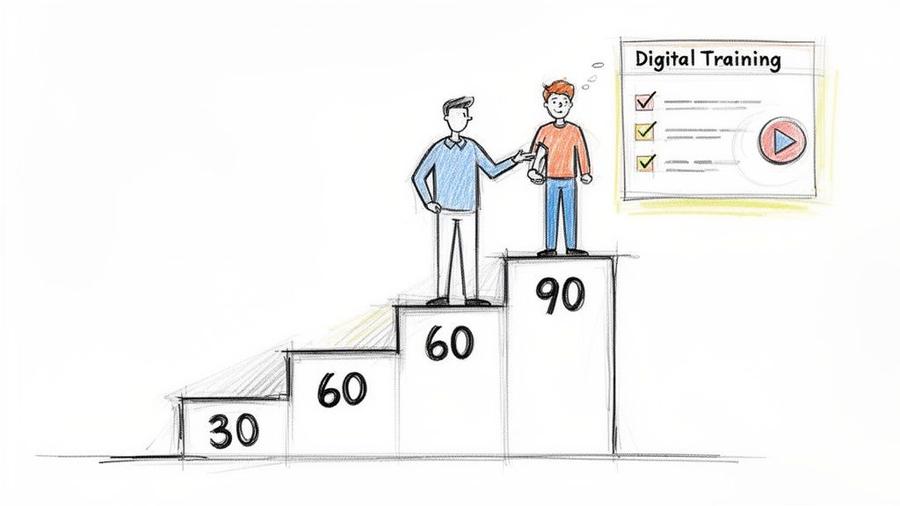
- Schedule Regular Check-ins: Do not wait for problems to arise. Implement a formal check-in schedule at 30, 60, and 90 days to gather feedback, address concerns, and reinforce training. This shows you are invested in their success and provides valuable insight into your program's effectiveness.
3. Develop a Strategic Hiring and Talent Acquisition System
Moving beyond reactive hiring to build a strategic talent acquisition system is a transformative step for any restaurant. This approach shifts the focus from merely filling empty spots to proactively building a high-performing team aligned with your brand’s culture and values. Instead of just looking at a resume, a strategic system evaluates candidates for cultural fit, long-term potential, and the soft skills essential for hospitality, like empathy and communication. This method creates a sustainable pipeline of quality candidates, reducing turnover and ensuring every new hire strengthens your team.
The primary benefit is building a team that is not only skilled but also deeply committed to your restaurant's mission. When hiring is intentional, new team members integrate faster, perform better, and stay longer. Companies like In-N-Out Burger exemplify this by prioritizing internal promotions and a strong cultural fit, leading to remarkably high employee retention. This systematic approach reduces time-to-hire, lowers recruiting costs, and elevates the consistency of your guest experience.
How to Implement a Strategic Hiring System
Transitioning to a more thoughtful hiring process involves defining what you are looking for and structuring your interviews to find it.
- Define Your Ideal Candidate Profile: Go beyond job duties and list the core values, personality traits, and soft skills that successful team members share. This becomes your hiring scorecard.
- Use Behavioral Interview Questions: Instead of asking, "Are you a team player?," ask, "Tell me about a time you had a conflict with a coworker and how you resolved it." This uncovers real-world behavior, not just rehearsed answers.
- Involve Your Team: Have top-performing employees participate in the interview process. They offer valuable insights into a candidate's potential team dynamic and cultural fit.
- Write Compelling Job Postings: Your job description is a marketing tool. Highlight your culture, growth opportunities, and what makes your restaurant a great place to work, not just a list of responsibilities. For deeper insights into candidate psychology, it can be useful to learn more about how to use personality assessments for hiring to refine your selection process.
4. Foster a Strong Company Culture and Team Engagement
Moving beyond just tasks and payroll, intentionally building a strong company culture is one of the most powerful restaurant management tips for long-term success. A positive culture, rooted in shared values and psychological safety, is the invisible force that drives exceptional guest service, reduces costly employee turnover, and ultimately protects your bottom line. It transforms a job into a community, making your restaurant a place where people genuinely want to work and contribute their best.

The core benefit is creating a resilient and engaged team that becomes a true competitive advantage. When employees feel valued, respected, and connected to a larger purpose, their motivation soars. This principle is famously championed by leaders like Danny Meyer of Union Square Hospitality Group, whose "enlightened hospitality" model proves that prioritizing staff well-being directly leads to superior guest experiences. In a competitive labor market, culture is not a luxury; it is a critical strategy for attracting and retaining top talent.
How to Build a Strong Company Culture
Cultivating a positive environment requires deliberate and consistent effort. It starts with leadership and must be reinforced in daily operations.
- Define Your Values Collaboratively: Instead of imposing values from the top down, involve your entire team in a workshop to define what your restaurant stands for. This creates genuine ownership and buy-in from day one.
- Recognize and Celebrate Wins: Implement a system for regular, public recognition. This can be as simple as a "kudos" channel in a team chat app or a weekly shout-out during pre-shift meetings. Celebrating achievements reinforces desired behaviors.
- Invest in Team Development: Offer opportunities for growth beyond an employee's current role. This could include cross-training, management coaching, or workshops on skills like financial literacy or wine knowledge.
- Model the Culture from the Top: As a leader, your actions speak louder than any mission statement. Visibly embody the values you want to see, address conflicts transparently, and consistently champion a positive, inclusive environment.
5. Optimize Menu Design and Engineering for Profitability
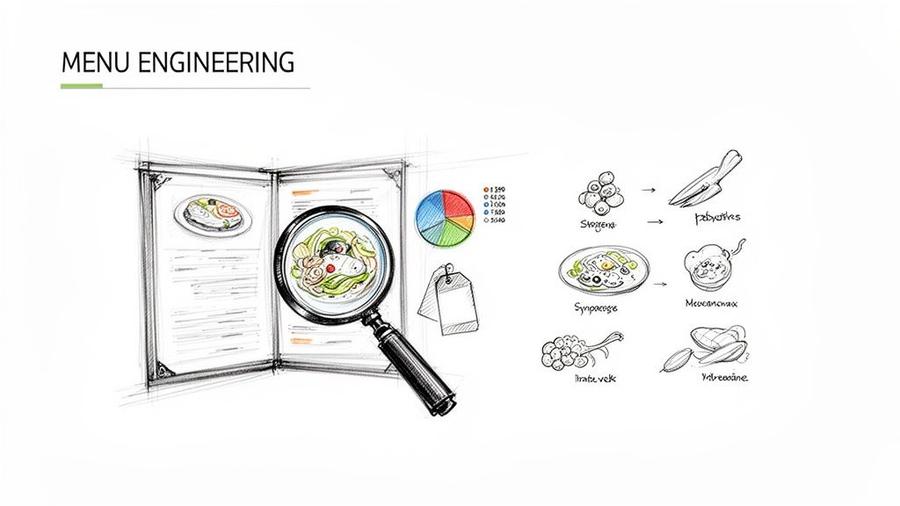
Your menu is far more than a simple list of dishes; it is your single most important internal marketing and sales tool. Shifting from a static menu to one that is actively engineered for profitability is a powerful restaurant management tip that directly impacts your bottom line. Menu engineering is the practice of strategically analyzing and designing a menu to encourage customers to purchase the most profitable items, blending psychology, data analysis, and culinary creativity.
This data-driven approach involves evaluating every dish based on its profitability (contribution margin) and popularity (sales volume). By understanding how each item performs, you can make informed decisions about its placement, pricing, and description. The result is a menu that not only guides guest choices but also maximizes revenue per customer, optimizes inventory, and streamlines kitchen operations by focusing on high-performing, efficient dishes.
How to Implement Menu Engineering
Getting started with menu engineering involves a systematic analysis of your sales and cost data. This process turns your menu into a dynamic, profit-driving asset.
- Categorize Your Menu Items: Use POS data to plot every item on a matrix with four quadrants: Stars (high profit, high popularity), Plowhorses (low profit, high popularity), Puzzles (high profit, low popularity), and Dogs (low profit, low popularity). This visual map is the foundation for all strategic decisions.
- Focus on the Stars and Puzzles: Highlight your "Stars" with prime menu placement, compelling descriptions, and photos. For "Puzzles," work with your servers to actively recommend them or slightly adjust the recipe or price to boost their appeal without sacrificing margin.
- Analyze and Adjust Plowhorses: For popular but low-margin "Plowhorses," look for opportunities to slightly increase the price or reduce food cost. A small adjustment here can have a significant impact due to high sales volume.
- Make Decisions on Dogs: Items in the "Dog" category are prime candidates for removal from the menu. They take up valuable space, complicate inventory, and contribute little to your profit. Replace them with new, potentially higher-margin specials.
- Leverage Pricing Psychology: Implement strategies like "charm pricing" (e.g., $14.95 instead of $15.00) and anchoring, where a high-priced item makes other dishes seem more reasonable. Remove dollar signs to reduce the focus on cost and focus it on the experience.
6. Implement Effective Cost Control and Financial Management Systems
Moving beyond intuition-based spending to a systematic financial management model is one of the most critical restaurant management tips for ensuring long-term viability. Many restaurants fail due to poor financial oversight, not poor food. This approach involves rigorously tracking, analyzing, and controlling all costs, including food, labor, and overhead, to protect razor-thin profit margins. By establishing budgets, monitoring key performance indicators (KPIs), and making data-driven decisions, you can steer your restaurant toward sustainable profitability.
The primary benefit is gaining complete control over your financial health. Understanding your prime cost, food cost percentage, and other key metrics in real time allows you to identify issues before they escalate into crises. When you have a clear picture of your cash flow and profitability, you can invest strategically, manage debt effectively, and weather unexpected challenges. Modern POS systems like Toast provide real-time analytics, turning your sales and expense data into a clear profit and loss statement, empowering you to make smarter, faster decisions.
How to Implement Strong Financial Controls
Building a robust financial system is about creating consistent habits and leveraging the right tools. A phased approach makes it manageable and highly effective.
- Establish a Weekly Financial Review: Dedicate a specific time each week to review your key financial reports. This ritual should include analyzing your profit and loss statement, sales vs. labor reports, and inventory variance. Consistency is key to catching trends early.
- Set and Monitor Prime Cost: Your prime cost, the total of your cost of goods sold (COGS) and total labor cost, is the most important number to control. Aim to keep it at 60% of total sales or less. You can learn more about this vital metric and how to calculate prime cost to better manage your biggest expenses.
- Create a Core KPI Dashboard: You do not need to track a hundred metrics. Identify the five to 10 most important KPIs for your specific concept, such as prime cost, food cost percentage, labor cost percentage, sales per square foot, and table turnover rate. Display them on a simple dashboard for you and your management team to review daily or weekly.
- Focus on High-Impact Cost Savings: A core aspect of implementing effective cost control and financial management systems involves strategies to reduce food waste in restaurants and boost profits. Start with your inventory management, menu engineering, and portion control to make an immediate impact on your food costs.
7. Master Customer Experience and Service Consistency
Creating a memorable dining experience goes far beyond the food on the plate; it is one of the most vital restaurant management tips for building a loyal customer base. Mastering service consistency transforms a good restaurant into a great one, ensuring that every guest receives the same high level of care, attention, and hospitality on every single visit. This approach, championed by hospitality leaders like Danny Meyer, focuses on creating intentional, positive emotional responses that turn first-time visitors into brand advocates.
The core benefit is building a powerful, self-sustaining marketing engine through word-of-mouth and positive online reviews. When service is consistently excellent, like the legendary standards at In-N-Out Burger or The Ritz-Carlton, it becomes your primary differentiator in a crowded market. This systemization of hospitality builds trust, encourages repeat business, and empowers your team to deliver exceptional service with confidence, knowing exactly what is expected of them.
How to Implement Service Consistency
Standardizing your guest experience requires a clear vision, systematic training, and a commitment to continuous improvement.
- Establish “Gold Standard” Service Steps: Document a clear, non-negotiable sequence of service for every guest interaction, from the initial greeting to their departure. This should include specific timings, phrases, and actions, but allow room for individual staff personality to shine through.
- Empower Your Team to Solve Problems: Train and authorize your staff to handle common guest complaints or issues on the spot without needing a manager’s approval. A simple guideline like, "You are empowered to spend up to $25 to make a guest happy," can resolve problems quickly and delight customers.
- Systematically Gather and Act on Feedback: Actively monitor online review sites and social media mentions, responding professionally to both positive and negative comments. Use surveys and comment cards to collect direct feedback, and review this data in pre-shift meetings to inform training and celebrate successes.
- Train for Anticipatory Service: Move your team’s mindset from reactive to proactive. Instead of waiting for a guest to ask for a refill, train them to notice when a glass is two-thirds empty. For a deeper look into elevating your service, explore these proven strategies for how to increase guest satisfaction.
8. Leverage Technology and Operational Systems Strategically
Adopting the right technology is a pivotal restaurant management tip for gaining a competitive edge, but it requires a strategic approach. This means implementing tools and systems that improve efficiency, reduce errors, and provide actionable data without creating complexity or sacrificing the human element of hospitality. The goal is to solve specific operational problems, from managing reservations with OpenTable to streamlining delivery orders from Grubhub and DoorDash, rather than adopting technology for its own sake.
A well-integrated tech stack acts as the central nervous system of your restaurant. When your Point of Sale (POS) system, like Toast or Square, communicates seamlessly with your inventory and scheduling software, you unlock powerful insights that drive smarter decisions. This integration transforms isolated data points into a holistic view of your business, allowing you to optimize everything from food costs to labor allocation with precision.
How to Implement Technology Strategically
A successful rollout focuses on solving clear problems and ensuring the team is equipped to use the new tools effectively. A measured, thoughtful approach prevents overwhelming your staff and ensures a positive return on investment.
- Start with a Single, Critical System: Identify your biggest operational bottleneck, whether it is inventory management, online ordering, or table turnover. Focus on implementing one solution that addresses that specific pain point before expanding your tech stack.
- Involve Your Team in the Selection Process: Your staff are the end-users. Involving them in demos and asking for feedback on usability leads to greater buy-in and a smoother transition. They often see operational challenges that managers might miss.
- Prioritize Seamless Integration: Before committing to a new platform, confirm it integrates smoothly with your existing systems, especially your POS. A fragmented tech stack creates data silos and manual work, defeating the purpose of the investment.
- Provide Comprehensive Training: Do not just show your team how to use a new tool; explain why it is being implemented and how it will benefit them and the guests. Schedule dedicated training sessions before the system goes live and provide ongoing support.
9. Build a Retention Strategy and Career Path Development
Shifting focus from constant recruitment to strategic employee retention is a game-changer for long-term stability and growth. This approach involves creating a formal system that not only keeps talented staff but also provides them with clear, achievable opportunities for advancement within your organization. A robust retention strategy moves beyond competitive wages to cultivate a culture where employees see a future, not just a job, which is one of the most vital restaurant management tips for building a resilient team.
The primary benefit is a significant reduction in turnover costs and the preservation of institutional knowledge. When you develop and promote from within, you ensure operational consistency, reinforce your company culture, and boost team morale by showing everyone that hard work is rewarded. Brands like Chipotle have built their entire management pipeline on this model, promoting crew members to leadership roles and creating a visible pathway to success that inspires loyalty and high performance.
How to Implement Career Path Development
Creating this structure requires intentional planning and consistent communication. Focus on building a transparent framework that every team member can understand and strive for.
- Map Out Career Ladders: Define clear roles and responsibilities for each position, from entry-level to senior management. For each step, document the specific skills, training, and performance metrics required for advancement.
- Prioritize Internal Promotions: Make it a policy to look internally for candidates before searching externally. Publicly celebrate promotions to showcase that growth is not just possible but actively encouraged within your restaurant.
- Invest in Skill Development: Offer tangible growth opportunities like paid certifications (e.g., sommelier, Cicerone), leadership workshops, or cross-training in different departments. Assigning mentors to high-potential employees can accelerate their development.
- Conduct Regular Career Conversations: Go beyond annual reviews. Schedule one-on-one check-ins specifically to discuss an employee’s career goals, ambitions, and what steps they need to take to reach the next level in your organization. This makes them feel valued and invested in.
10. Establish Regular Communication and Leadership Transparency
Fostering a culture of open communication and transparent leadership is a powerful restaurant management tip that directly impacts team morale, engagement, and retention. This approach moves beyond top-down directives to create an environment where staff are kept informed about the business’s performance, goals, and challenges. When leaders share the "why" behind their decisions, it builds trust, reduces the spread of rumors, and establishes a sense of shared purpose, transforming employees from mere staff members into valued partners in the restaurant's success.
The benefits are significant: transparency boosts psychological safety, making employees feel comfortable asking questions and offering feedback without fear of reprisal. This open dialogue leads to better problem-solving, increased innovation, and a team that is more resilient when facing operational challenges. Restaurants that practice open-book management or hold regular all-hands meetings often see lower turnover because their teams feel respected, included, and invested in the collective outcome.
How to Implement Transparent Communication
Building a transparent culture requires consistency and commitment from leadership. Start by integrating clear communication channels into your daily and weekly operations.
- Schedule Regular Team Meetings: Implement a non-negotiable weekly pre-shift meeting or a monthly all-hands meeting. Use this time to share key metrics, celebrate wins, and discuss upcoming goals or changes. Consistency is crucial for building trust.
- Share Business Metrics Responsibly: You do not need to share every financial detail, but providing context on food costs, labor percentages, or guest satisfaction scores helps your team understand their impact on the bottom line.
- Explain the 'Why' Behind Decisions: When a menu item is removed or a policy changes, transparently explain the reasoning. This prevents misinterpretation and shows respect for your team's intelligence and contributions.
- Create Multiple Feedback Channels: Not everyone is comfortable speaking up in a group setting. Offer various ways for employees to communicate, such as a suggestion box, one-on-one check-ins, or a dedicated digital channel like a team Slack.
- Communicate Bad News Early and Honestly: Avoid letting rumors fester. If the business is facing a tough period, address it with the team directly and honestly. Your candor will be appreciated far more than silence or sugarcoating.
Top 10 Restaurant Management Tips Comparison
Putting These Tips Into Action: Your Next Move
We have journeyed through a comprehensive roadmap of actionable restaurant management tips, covering everything from data-driven scheduling, and strategic hiring to fostering a vibrant culture, and mastering the guest experience. The insights provided are not theoretical; they are practical, operator-tested strategies designed to build a more resilient, profitable, and enjoyable restaurant environment. Moving beyond generic advice, we explored specific actions like implementing pre-shift huddles, using menu engineering matrices, and developing clear career paths for your team.
The common thread weaving through every tip is the principle of intentionality. Thriving restaurants do not happen by accident. They are the result of deliberate systems, consistent execution, and a leadership team committed to continuous improvement. From the way you onboard a new dishwasher to the key performance indicators you review weekly, every decision contributes to the bigger picture.
From Information to Implementation: Your First Steps
Feeling overwhelmed by the sheer volume of information is a natural reaction. The key is not to implement all 10 strategies overnight but to create focused, sustainable momentum. The most successful operators know that small, consistent changes compound over time, yielding significant results.
Your next move is to choose one or two areas that represent the biggest pain points or the greatest opportunities for your specific operation right now.
- Is labor cost a constant challenge? Start with Tip #1: Implement Data-Driven Scheduling. Begin by tracking your sales per labor hour (SPLH) for one week and comparing it against your historical data.
- Struggling with high turnover? Focus on Tip #9: Build a Retention Strategy. Your first step could be as simple as conducting three "stay interviews" with your top performers to understand what keeps them engaged and motivated.
- Are food costs creeping up? Dive into Tip #5: Optimize Menu Design and Engineering. Calculate the food cost percentage for your top five best-selling items to identify immediate opportunities for price adjustments or recipe modifications.
By selecting a manageable starting point, you transform this article from a passive reading experience into an active tool for business improvement. Create a simple action plan for your chosen tip, assign clear ownership, and set a deadline. This focused approach is the most effective way to turn these restaurant management tips into tangible, positive outcomes for your business, your team, and your guests.
Remember, effective leadership is not about having all the answers. It is about asking the right questions, building strong systems, and empowering your team to succeed. The journey of mastering restaurant management is a marathon, not a sprint, and every single step forward builds the foundation for long-term success.
Ready to turn these tips into reality with proven tools and a supportive community? MAJC offers operator-tested templates, from hiring scorecards to financial dashboards, designed to help you implement these strategies effectively. Join a network of your peers and access the resources you need to build a more profitable and sustainable restaurant at MAJC.