

On this page 24 sections
- Building Your Soft Opening Strategy
- Define Your Core Objectives
- Key Objectives for Your Soft Opening
- Map Your Timeline and Budget
- Preparing Your Team for Opening Night
- Build Your Training Playbook
- Craft Smart Shift Plans
- Run Realistic Mock Services
- Refining Your Menu and Guest Experience
- Curate a Strategic Soft Opening Menu
- Map and Troubleshoot the Guest Journey
- Managing Your Invite List and First Impressions
- Building a Tiered Guest List
- Soft Opening Guest Tiers
- Crafting the Perfect Invitation
- Managing Your Pre-Launch Social Media
- Turning Feedback into Actionable Improvements
- Gathering High-Quality Insights
- The Power of Team Debriefs
- Analyzing and Prioritizing Changes
- Common Questions About Restaurant Soft Openings
- So, Do We Actually Charge People?
- How Long Should This Thing Last?
- What Are the Biggest Mistakes We Can Make?
A restaurant soft opening is an invitation-only dry run. It’s your final dress rehearsal before the curtain goes up on your grand opening.
This is your chance to test your operations, train your staff, and get honest feedback in a controlled, lower-stakes environment. It’s all about working out the kinks before you have a full house of paying customers watching.
Building Your Soft Opening Strategy
Embarking on a new restaurant is a massive undertaking, and the soft opening is far more than a pre-party. Think of it as a strategic tool that sets the stage for your long-term success.
The restaurant industry is in a growth phase. A well-planned soft opening is your best bet for building team confidence and making sure you’re ready to compete.
Define Your Core Objectives
Before you even think about an invitation list, you need to know what a "win" looks like. What are you actually trying to accomplish? Are you stress-testing the kitchen to see if it can handle a 7:00 p.m. rush? Or are you just trying to figure out if your signature cocktail is a hit?
Clear goals will guide every other decision you make.
Common objectives usually fall into a few buckets:
- Operational Stress Test: This is about flow. Does the pass between the kitchen and the floor work? Where are the service bottlenecks? Can the POS system handle a flurry of orders without crashing?
- Menu Refinement: Get real, honest feedback on dishes, portion sizes, and pricing. This is your last chance to make tweaks before you commit thousands of dollars to printed menus.
- Staff Training and Readiness: A soft opening is a live-fire exercise for your team. It gives everyone, from hosts to line cooks, a chance to build muscle memory, practice communication, and get comfortable with your service standards.
This diagram breaks down the pillars of a solid strategy: your goals, your timeline, and your budget.
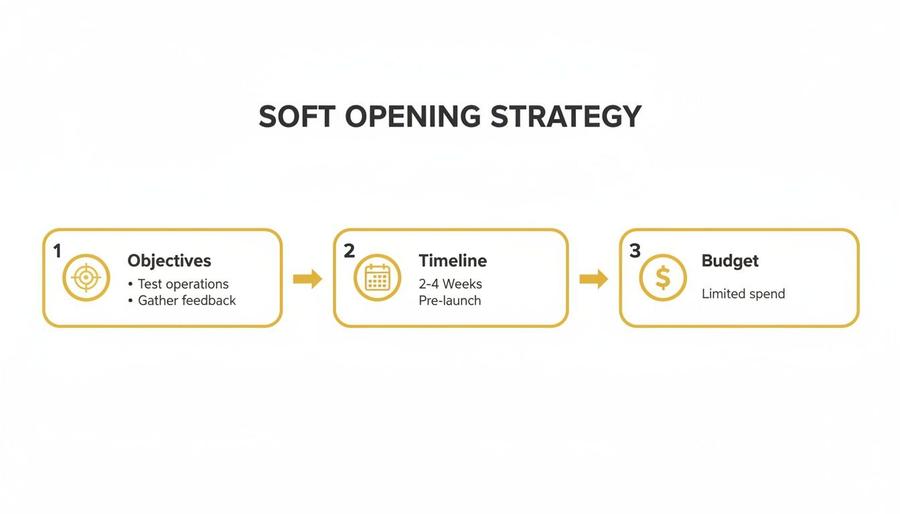
It’s a simple but powerful visual—a successful event is built on a clear purpose, a realistic schedule, and smart financial planning.
Here’s a quick table to help you connect your goals to real, trackable metrics.
Key Objectives for Your Soft Opening
Treat this as a starting point. Your goals will determine which of these KPIs matter most for your specific concept.
Map Your Timeline and Budget
Once your objectives are clear, the timeline builds itself. Just work backward from your grand opening date. Make sure you leave enough breathing room for staff training, a few mock services, and time to implement the feedback you receive. A typical soft opening phase can last anywhere from three days to two weeks.
The budget is the final piece of the puzzle. You need to account for everything: staff wages for training and the events themselves, food and beverage costs, and any marketing materials for invitations. To get people in the door and build some early buzz, explore some effective digital marketing strategies for your restaurant.
A soft opening is not a revenue-generating event. Its value is in the data and experience you gain. Think of the budget as an investment in a smoother, more successful grand opening.
Preparing Your Team for Opening Night
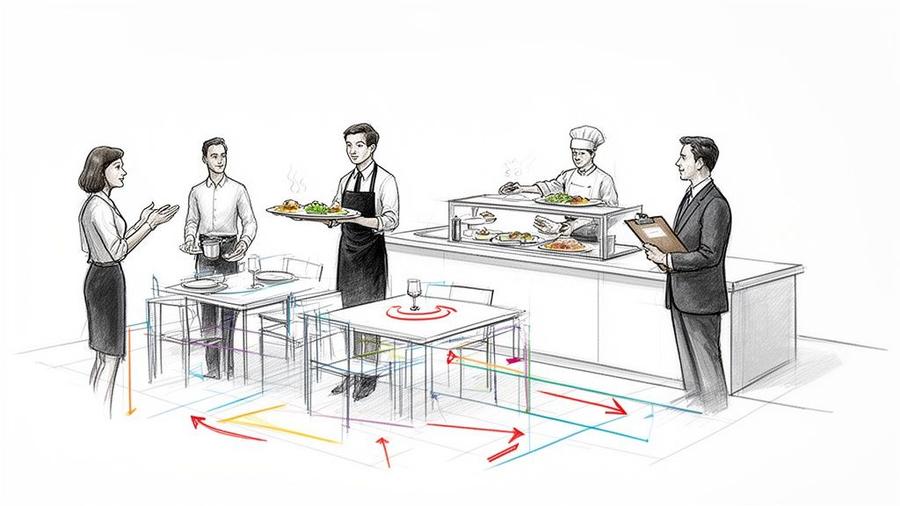
Let's be honest: a perfect menu doesn't matter if the team executing it is shaky. Your team is the heart of your restaurant, and the soft opening is their final, most important dress rehearsal. It’s your one chance to see how they perform under real pressure before the paying public arrives.
This is where you move beyond theory and build the muscle memory your staff needs to handle a real service with grace. It’s where individual hires start to feel like a cohesive team.
Build Your Training Playbook
Every single role—from the host managing the door to the dishwasher in the pit—needs a clear, specific training checklist. This isn't just about knowing what's in the risotto; it's about mastering the entire guest experience you've spent months designing.
Don't be generic. Your checklists should be hyper-specific and actionable.
- Hosts: Need to practice the exact greeting script, learn the table numbering system cold, and run drills on managing a waitlist.
- Servers: Must master your POS by punching in complex orders, splitting checks six ways, and voiding items. They should be able to tell the story behind your signature dishes without skipping a beat.
- Line Cooks: Should rehearse plating every single dish until it’s second nature. Time the ticket from order-in to pass to identify any kitchen bottlenecks before they become a real problem.
These detailed guides create consistency and give your team a clear roadmap. For a deeper dive, check out our guide on creating effective restaurant standard operating procedures examples.
The goal isn't just for your staff to know what to do. It's for them to understand why they're doing it. When your team gets the bigger picture, they can think on their feet and solve problems creatively.
Craft Smart Shift Plans
A soft opening requires a delicate staffing balance. You need enough hands on deck for a smooth service, but you don't want half your team standing around with nothing to do. This is where strategic shift planning comes into play.
Forget scheduling your entire crew at once. Create a staggered schedule instead. Maybe your A-team works the first "friends and family" night, and you rotate in newer staff for the second service. This lets you give more focused training and feedback to smaller, more manageable groups.
It's also the perfect time to pressure-test your scheduling software and other tech. Test your systems now, when the stakes are low, to ensure everything runs smoothly before you have a full house. And as you prepare, mastering recruitment in hospitality is key to building a strong talent pipeline that makes scheduling for events like this so much easier.
Run Realistic Mock Services
Think of a mock service as a full-contact scrimmage before the big game. It’s a simulated dinner service designed to replicate the flow and pressure of a real night. This is where you iron out the communication kinks between the front and back of the house.
Don't just run through a perfect service. Throw some curveballs.
- Have a "guest" send a dish back to the kitchen.
- Simulate the POS system going down for five minutes.
- Have a large party all order at the same exact time.
These drills build resilience and expose communication gaps in a safe environment. After every run-through, hold a team-wide debrief. Talk about what went right, what felt chaotic, and how to improve next time. This collaborative feedback loop is invaluable for building a confident, polished team that's truly ready for opening night.
Refining Your Menu and Guest Experience
The energy leading up to a soft opening is electric. But this is where your concept truly meets reality. It’s the first time your menu moves from a document into an actual service, and your standards get tested by real people.
Think of this phase less about making a profit and all about refinement. It’s your chance to pressure-test dishes, smooth out the service flow, and dial in the guest journey from the moment they walk in until they leave. Getting this right lays the groundwork for a killer grand opening and a strong reputation from day one.
Curate a Strategic Soft Opening Menu
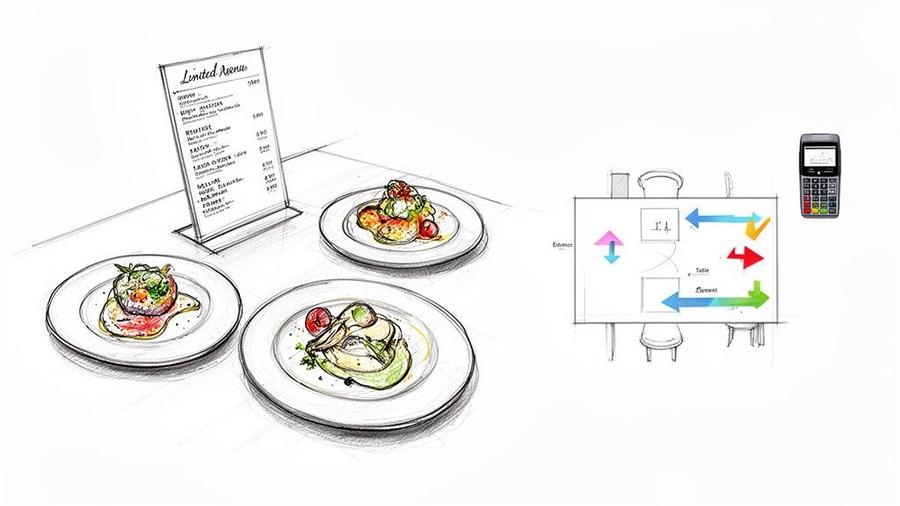
First things first: resist the temptation to roll out your entire menu. A full menu will absolutely overwhelm a new kitchen team and make it impossible to gather focused, meaningful feedback.
Instead, curate a limited, strategic menu. This gives your kitchen the breathing room it needs to build rhythm and consistency. For example, a new cafe might just offer two espresso drinks, a drip coffee, one signature tea, and three of its most promising pastries. This lets the baristas master their workflow on new equipment and helps the bakers nail cook times under real-world pressure.
A tighter menu offers some serious benefits:
- Targeted Feedback: You can focus guest attention on your potential signature dishes.
- Reduced Waste: Ordering for a smaller menu is far more precise, keeping food costs in check.
- Kitchen Efficiency: Line cooks can perfect a few dishes instead of struggling with 20.
This is also your first real chance to test drive your menu pricing. Are the portion sizes right for the price point? Is your food cost percentage actually lining up with your projections? Answering these questions now will save you a world of hurt and money later on.
Your soft opening menu should represent different stations in your kitchen. Include a popular appetizer, a complex main, a simple fan-favorite, and a signature dessert. You want to test every part of your line simultaneously.
Map and Troubleshoot the Guest Journey
Beyond the food, the soft opening is your laboratory for the entire guest experience. You need to walk through every single step from your customer’s perspective and pinpoint every potential moment of friction before it can damage your reputation.
Start by mapping out every touchpoint. The journey begins the second a guest is greeted at the door and continues through ordering, dining, payment, and their final goodbye. Each step is an opportunity to either delight or disappoint.
Your goal here is to spot operational bottlenecks before they become five-alarm fires. Is the host stand creating a traffic jam at the front door? Does the table layout make it a nightmare for servers to navigate a busy floor? These are the small details that have a massive impact on service flow and the overall vibe of the room.
This is also the perfect time to put your point-of-sale (POS) system through its paces. Can servers easily split checks for a party of eight? Does the system talk to the kitchen printers without any hiccups? A clunky POS can bring a service to a grinding halt, so work out the bugs now while the stakes are low. If you want to dive deeper, our article on how to increase guest satisfaction is a great resource for focusing on these crucial details.
By meticulously analyzing and refining both your menu and the guest journey, you transform a simple trial run into a powerful tool for improvement. This deliberate process ensures that when you finally open your doors to the public, you’re delivering a polished, memorable experience that will have people lining up to come back.
Managing Your Invite List and First Impressions
The single most important decision you'll make for your soft opening isn't the menu or the music—it's who you invite through the door. These first guests are not just customers. They are your first critics, your earliest champions, and your most valuable source of unfiltered feedback.
Crafting your guest list is an art. This isn’t about just filling seats. It's about strategically curating an audience that helps you stress-test the kitchen, work out the kinks in service, and generate authentic buzz before you open to the public.
Building a Tiered Guest List
Not every guest has the same job. A tiered approach lets you control the environment and gather different kinds of feedback at each stage. Think of it as a series of dress rehearsals, each one with a slightly different audience and a clearer purpose.
The strategy is simple: start with your inner circle and slowly expand outward. This layered approach builds your team's confidence while steadily increasing the pressure in a way you can actually manage.
Here’s a look at how to structure your guest list to get the feedback you need, when you need it.
Soft Opening Guest Tiers
Choosing the right guests for the right night is critical. A friends and family night is for finding your sea legs; an industry night is for getting tough, technical feedback. This table breaks down who to invite, and why.
By phasing your invites, you get to practice on a friendly crowd before the real critics show up. This protects your team's morale and gives you time to make adjustments based on increasingly sharp feedback.
Crafting the Perfect Invitation
Your invitation does more than just share a date and time—it sets crucial expectations. The language you use is key. You want guests to feel like collaborators in your launch, not just people getting a free meal.
Be clear and upfront that this is a training event.
Simple phrases like, "We're still learning," "Your feedback is a gift," or "Help us prepare for our grand opening" work wonders. This framing encourages patience and turns passive diners into active, helpful participants.
Honesty is your best marketing tool. When guests know they're part of a practice run, they are far more understanding of the inevitable mistakes and more willing to provide the constructive criticism you desperately need.
Managing Your Pre-Launch Social Media
It's tempting to shout about your opening from the digital rooftops. Don't. During a soft opening, control is everything. A public announcement can lead to an unmanageable flood of people who don't understand the "practice" nature of the event, leading to bad first impressions and even worse online reviews.
Instead, think "less is more."
- Do: Post teaser content. Share behind-the-scenes photos of the space, your team in training, or a close-up of an ingredient you're excited about. Build anticipation with phrases like, "Something exciting is cooking..." without giving away a date.
- Don't: Announce the soft opening dates on your main feed. If you want to pull in some loyal followers, use a limited-time Instagram Story with a clear call to action, like "DM us for a chance to join our private preview." This keeps you in the driver's seat.
- Do: Encourage your invited guests to post. While you control your own channel, what others share can create powerful, organic buzz. You can even create a unique, private-event hashtag for them to use.
This controlled approach lets you build a positive narrative on your terms. You’re not just testing your menu; you're testing your story and making sure it lands perfectly before the whole world is invited to the show.
Turning Feedback into Actionable Improvements
The real value of a soft opening isn't the practice runs or the early buzz. It's the data. Raw, honest feedback is the most valuable currency you'll collect, and what you do with it is the true test.
This is your chance to listen to what your first guests and your own team are telling you while the stakes are still low. Turning that flood of information into a concrete action plan is what separates a smooth launch from a chaotic one.
Gathering High-Quality Insights
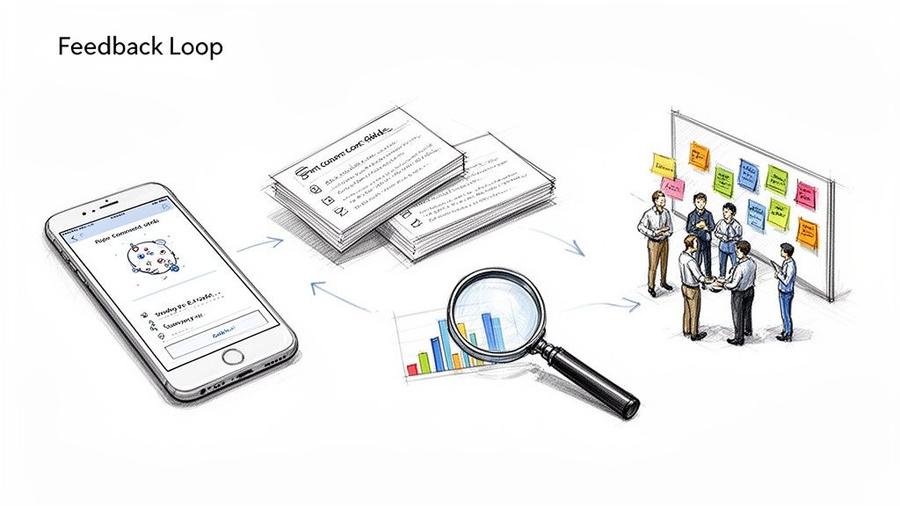
You have to make it easy for people to share what they really think. Just hoping guests will offer up their opinions isn’t a strategy. You need a system to capture their experience, and mixing up your methods gives you the clearest picture.
Consider these proven techniques:
- Simple Comment Cards: Put them on every table, but ask targeted questions. Go beyond "How was everything?" and get specific: "Which dish was the highlight of your meal?" or "Was there any point during your service that felt slow?"
- Digital Surveys: Send a quick, mobile-friendly survey via email or text the next day. This gives people time to reflect and gives you data you can actually sort. A simple Google Form or a tool like SurveyMonkey works perfectly.
- Manager Check-ins: Empower your managers to visit tables and ask for feedback directly. A simple, "Since we're still in training, I'd love to know what we can do better," almost always uncovers gold.
A structured approach keeps feedback from turning into a game of telephone. You get accurate, actionable information straight from the source.
The goal is to spot patterns, not just collect one-off comments. One person disliking the risotto is an opinion. Ten people saying it was under-seasoned is a data point you have to address.
The Power of Team Debriefs
Your guests see the show from the front, but your staff sees everything that happens backstage. Their perspective is absolutely essential, and the best time to capture it is right after the curtain falls.
Holding a brief, 15-minute post-shift huddle with the entire team is non-negotiable. This is where you uncover the "why" behind the problems. If guests reported slow drink times, your bartender can tell you the ice machine's location is creating a bottleneck no one else would see.
Create a safe space where everyone, from the dishwasher to the lead server, feels comfortable speaking up. Ask direct questions:
- What was the biggest challenge tonight?
- What system or process felt clunky or inefficient?
- Did we run low on anything unexpectedly?
- Where did communication break down?
These debriefs build a culture of constant improvement and empower your team to be part of the solution. They see the problems firsthand and often have the best ideas on how to fix them. If feedback gets tense, our guide on how to handle customer complaints offers great strategies for keeping conversations productive.
Analyzing and Prioritizing Changes
Once you have feedback from both guests and staff, it’s time to get organized. A simple spreadsheet is all you need to log every comment, noting where it came from and how often it pops up. This is where you connect the dots.
Sort the feedback into a few key categories: Food, Service, Ambiance, and Operations.
Look for the recurring themes. Are multiple people mentioning the music is too loud? Is the kitchen consistently getting slammed on one specific dish? These patterns are your roadmap.
Remember, the modern guest experience doesn't stop at your front door. With 50% of U.S. adults having used a food delivery app in the last year, according to this report on food service trends from the USDA, your soft opening must pressure-test your digital systems. That includes everything from your online ordering portal to how you hand off bags to drivers.
With all the issues identified, it's time to prioritize. Use a simple framework to decide what to fix first:
- High-Impact, Easy Fix: Do it immediately. (e.g., Adjusting the lighting levels).
- High-Impact, Hard Fix: Start planning now. (e.g., Retraining the entire team on a new POS workflow).
- Low-Impact, Easy Fix: Add it to the list for later. (e.g., Changing the brand of hand soap in the restroom).
- Low-Impact, Hard Fix: Re-evaluate if it's even worth the effort.
By systematically collecting, analyzing, and acting on feedback, you turn your soft opening into your most powerful learning tool. This loop of listening and iterating ensures that when you finally open to the public, you're not just ready—you're confident.
Common Questions About Restaurant Soft Openings
Even the tightest plan runs into questions. A soft opening isn’t like your normal Tuesday night service; it’s full of one-off decisions you’ll only have to make once. Here are our straight-up answers to the questions we hear most often from operators in the thick of it.
So, Do We Actually Charge People?
This is the big one, and there’s no single right answer. It all comes down to your goals for the night.
A lot of operators find a sweet spot by offering a heavy discount, such as 50% off all food, or comping the meal but charging for drinks. This does two key things. First, it creates a real transaction. Your servers have to actually use the POS, run credit cards, and handle payments like they would on a normal shift. Second, it attaches some value to the experience.
On the flip side, a completely free meal is a massive gesture of goodwill. This is a great move for industry folks, investors, or local media you’re trying to build a relationship with. It shows confidence and generosity.
Whatever you decide, the most important thing is to be crystal clear in the invitation. No one should walk in the door confused about what’s on you and what’s on them.
You're not trying to make money tonight. This is about training your crew, getting honest feedback, and building buzz before the doors officially open.
How Long Should This Thing Last?
The timeline can run anywhere from three days to two weeks. A small coffee shop might only need a weekend to iron out the workflow. But if you’re a big, full-service spot with a complex menu and bar program, you’ll want to give yourself more runway.
Instead of one huge, chaotic event, think about staging your soft opening over several nights with different groups of people. This lets you turn up the pressure on your team bit by bit.
A good progression usually looks something like this:
- Night One: Keep it tiny. This is for your inner circle—close friends and family who will love you even if the fish comes out cold. They’re your most forgiving audience.
- Nights Two and Three: Widen the circle a bit. Invite vendors, industry peers, and other trusted supporters. The pressure is a little higher, but the room is still full of friendly faces.
- Final Nights: Now you’re getting closer to the real deal. This is an invite-only preview for local business owners, community members, and maybe a few hand-picked media or influencers.
This tiered approach lets your team build confidence with every service. You can tweak things every night based on the previous shift’s feedback, so you’re truly dialed in for the grand opening.
What Are the Biggest Mistakes We Can Make?
The worst soft opening mistakes almost always happen when you forget it’s a dress rehearsal, not opening night. When you lose sight of that objective, things go off the rails fast.
Here are the three biggest pitfalls to sidestep:
- Inviting Way Too Many People: This is the classic, number-one mistake. Overbooking the room creates chaos, swamps your brand-new kitchen team, and defeats the entire purpose of a controlled test run. You want to simulate a busy service, not a dumpster fire. Keep the guest list tight.
- Treating It Like a Party: Yeah, the vibe should be fun, but this is a workday. You need a structured way to get feedback, whether it’s with simple comment cards or a digital survey. Just as important, you absolutely have to run a debrief with the team after every single shift to hear what went down behind the scenes.
- Not Listening to the Feedback: This is the most critical one. A soft opening is worthless if you don’t use what you learn. If a dozen people say a dish is under-seasoned, fix the recipe before you open. If servers keep pointing out a bottleneck at the service bar, change the layout. The whole event is a waste of time and money if you don't listen, adapt, and make real changes.
At MAJC, we give hospitality operators the tools, training, and community to turn challenges like a soft opening into a launchpad for success. From staff training modules to operational checklists and expert coaching, we help you build a smarter, more profitable restaurant. Find out how to run a better business at https://majc.ai/.