

On this page 25 sections
- The True Cost of Burnout in Your Hospitality Business
- The Financial Drain of Exhaustion
- More Than Just a Bad Day
- Early Warning Signs of Team Burnout
- Build a Schedule That Respects Your Team's Time
- Eliminate the Dreaded Clopening Shift
- Introduce Predictability with Core Scheduling Blocks
- Empower Your Team with Schedule Self-Selection
- Design Workloads That Energize, Not Exhaust
- Conduct a Workload Audit to Find Bottlenecks
- Build in Buffer Time for Recovery
- Empower Your Team with Autonomy
- Cultivate a Culture of Recognition and Growth
- Make Recognition a Daily Habit
- Link Performance to Tangible Rewards
- Create Clear and Achievable Growth Paths
- Champion Mental Health and Genuine Well-Being
- Make Mental Health Part of the Daily Conversation
- Provide Real, Accessible Support Systems
- Practical Mental Health Support Initiatives
- Your Questions About Preventing Burnout, Answered
- Where Should I Start if My Budget Is Limited?
- How Do I Get Buy-In from Senior Leaders or Owners?
- What if My Team Resists These Changes?
- How Can I Measure the Impact of My Efforts?
Fighting employee burnout is not just about keeping your team happy. It’s a core business strategy—one that protects your profits, your culture, and the guest experience you have worked so hard to build.
A proactive approach that focuses on fair scheduling, manageable workloads, and a culture of genuine recognition stops exhaustion before it takes root. The result? Better service, lower turnover, and a healthier bottom line.
The True Cost of Burnout in Your Hospitality Business
Before we get into the solutions, we need to be real about what employee burnout is actually costing you. It is not just a buzzword; it’s a silent profit killer. An exhausted team is a direct line to inconsistent service, a toxic culture, and a revolving door of new hires that drains your time and money.
The hospitality industry is a pressure cooker. Long hours, high stakes, and emotionally taxing guest interactions are the perfect recipe for burnout. And when your team is running on empty, the first casualty is always the guest experience. A server who’s stretched thin misses the little things. A stressed-out line cook makes mistakes. A tired host cannot deliver that warm, welcoming first impression.
The Financial Drain of Exhaustion
The numbers do not lie. A staggering 80.3% of hospitality workers report feeling burned out, the highest rate of any industry. This is not just a morale problem; it is a financial crisis hiding in plain sight.
The most obvious hit comes from high turnover. Understanding how to increase employee retention is non-negotiable for survival. Constantly recruiting, hiring, and training new staff is incredibly expensive, pulling resources that could be invested in growing the business.
This flow chart breaks down how quickly employee exhaustion turns into lost profits.
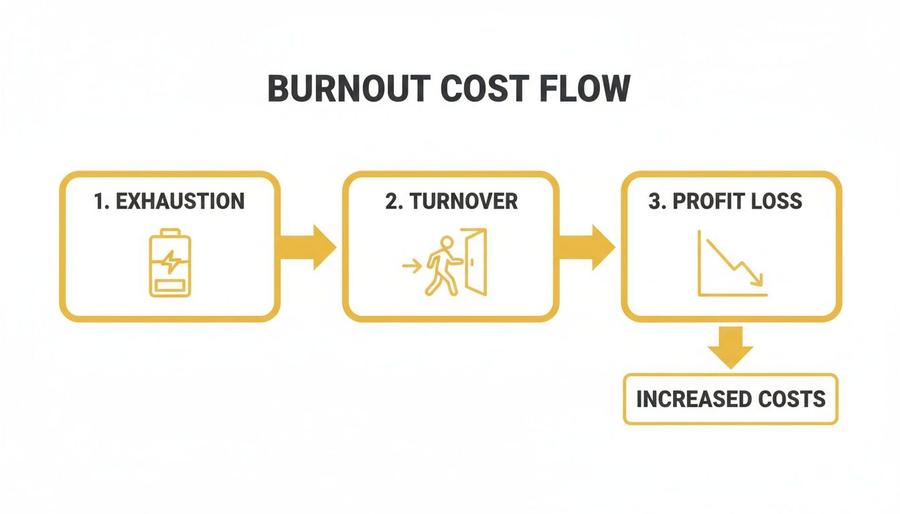
As you can see, it is a direct path. Unchecked exhaustion fuels turnover, which eats away at your bottom line through recruitment costs, lost productivity, and inconsistent service.
More Than Just a Bad Day
Catching burnout early is everything. It often starts with small shifts in behavior before it blows up into a full-blown crisis. You have to know what to look for.
Here’s a quick-reference guide to help you and your managers spot the subtle and not-so-subtle signs of burnout before they escalate.
Early Warning Signs of Team Burnout
Spotting these signs is not about placing blame; it is about paying attention. These are calls for help, and ignoring them will only make the problem worse and more expensive.
Tackling burnout is not just an HR initiative; it is a core operational imperative. When your people thrive, your business thrives. Recognizing the scale of the problem is the first real step toward building a more resilient and profitable restaurant.
Once you acknowledge these costs, the conversation shifts from, “How can we afford to fix this?” to “How can we afford not to?”
If you are looking for more ways to keep your best people, check out our in-depth guide on how to improve employee retention. The following sections will give you the practical, actionable strategies you need to start making a change today.
Build a Schedule That Respects Your Team's Time
A chaotic, unpredictable schedule is one of the fastest ways to burn out your team. When people cannot plan their lives outside of work, stress skyrockets, morale tanks, and your best employees start looking for the door. It is time to move beyond just filling shifts and start treating the schedule as a tool for well-being.
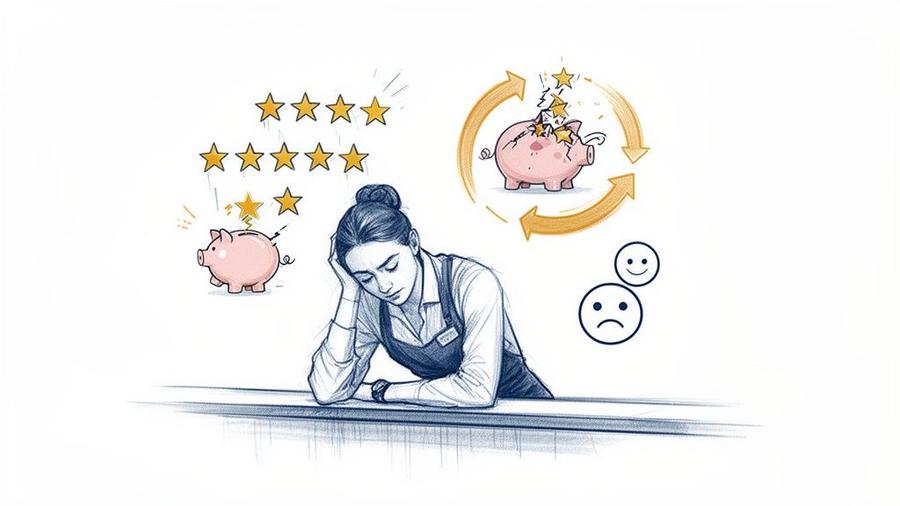
This problem is baked into the industry's old-school operating model. Employee turnover has hit crisis levels, with annual rates climbing past 70-80% in the U.S.—nearly double the national average. And with 60% of employees pointing to work-life balance as their top challenge, messy schedules create a vicious cycle. High turnover makes it impossible to build a stable schedule, and an unstable schedule causes more turnover.
This is not about being a "nice" boss. It is a strategic move. A stable schedule is fundamental to retention and operational excellence.
Eliminate the Dreaded Clopening Shift
We have all seen it: the infamous “clopening,” where an employee shuts the place down late at night only to come back a few hours later to open. It’s a notorious burnout machine. It leaves almost no time for commuting, sleep, or a personal life, leading to chronic exhaustion.
Banning this practice is one of the quickest, most impactful changes you can make.
Instituting a rule that requires a minimum of 10 or 12 hours between shifts sends a clear message: you respect your team's need for rest. This simple policy can dramatically improve well-being, reduce call-outs, and sharpen everyone's focus on the floor.
Many cities and states are already passing "predictive scheduling" or "fair workweek" laws that regulate practices like clopening. Getting ahead of these rules shows your team you value their time because it is the right thing to do, not just because you have to.
Introduce Predictability with Core Scheduling Blocks
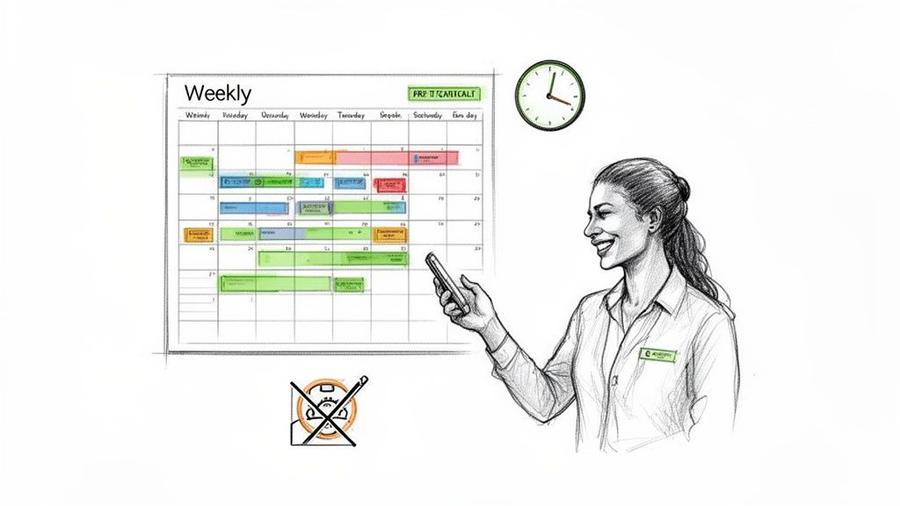
Constant schedule changes make it impossible for employees to arrange childcare, take a class, or even just make plans with friends. Core scheduling blocks are a fantastic way to bring back some consistency. This just means creating a set of predictable shifts that rarely change, which you can offer to your most reliable, long-term staff.
For example, a core schedule might mean a server knows they are working the Monday-to-Friday lunch shift, every single week. Of course, you still need flexibility for time-off requests, but the foundation of their schedule is solid.
- For employees, this means: They can build a routine, manage life outside work, and stop the mental drain of constantly checking a new schedule.
- For managers, this means: A simpler scheduling process, less last-minute scrambling, and a reliable base to build the week's staffing around.
This approach gives your team a sense of ownership and stability that is often missing in hospitality jobs. And if you are weighing your options, our guide on manual versus automated scheduling can help you figure out the best tools for the job.
Empower Your Team with Schedule Self-Selection
Giving your team some control over their hours is a powerful antidote to the helplessness that fuels burnout. Modern scheduling software makes it easy to let people swap shifts or even pick up open ones.
Instead of a manager dictating every single shift, you can post what’s available and let team members claim them based on their availability. This builds a culture of autonomy and trust.
To make a shift-swap system work:
- Set Clear Ground Rules: Establish clear guidelines, like requiring manager approval for all swaps and making sure the person covering the shift has the right training.
- Use Technology: Invest in a scheduling app where people can easily post shifts they want covered and see what is available to pick up.
- Promote Responsibility: Frame it as a team effort. When people know they can count on each other, the system works beautifully.
This does not mean managers lose control. It actually frees them from the endless back-and-forth of individual requests so they can focus on bigger operational needs.
At the end of the day, a respectful schedule shows you see your employees as whole people, not just names on a spreadsheet. That shift in perspective is everything if you are serious about preventing burnout for good.
Design Workloads That Energize, Not Exhaust
A punishing schedule is a clear path to burnout, but it’s only half the story. The quality of the work matters just as much as the quantity.
A 10-hour shift can feel manageable and rewarding, or it can be a frantic, soul-crushing sprint that leaves your team dreading their next clock-in. Preventing burnout means you have to consciously design roles and daily tasks that energize people instead of just draining them.
This means looking past the schedule and getting honest about the work itself. Are your people constantly slammed with no room to breathe? Are they stuck with ambiguous tasks and unclear expectations? Chronic overload is not just about long hours; it’s about high intensity without any recovery, and it is a major reason good people walk.
Conduct a Workload Audit to Find Bottlenecks
You cannot fix a problem you cannot see. A workload audit is your tool for getting a clear picture of how tasks are really distributed and where the pressure points are in your operation. The goal is not to micromanage; it is to spot the roles or shifts that are consistently overloaded.
Start by observing different dayparts. Is the opening bartender also stuck with all the prep while trying to handle the first guests? Does one server always get saddled with the largest, most demanding section? Often, these imbalances become "just the way things are" and go unnoticed until someone quits.
Then, talk to your team directly. Ask simple, open questions:
- What is the most stressful part of your shift?
- Where do you feel like you are always falling behind?
- If you had an extra 15 minutes, what would you do with it?
Their answers will reveal the hidden bottlenecks and operational friction points that fuel daily stress. This is not about finding fault; it is about fixing broken systems that set people up to fail.
Build in Buffer Time for Recovery
Back-to-back rushes with zero downtime are completely unsustainable. People need a moment to reset, grab some water, and mentally prepare for the next wave. Building buffer time into your shifts is a powerful and often overlooked strategy to head off exhaustion.
This does not mean scheduling people to stand around. It means realistically accounting for the small, in-between moments that make a shift manageable. For example, structuring server sections so they do not get three new tables at the exact same moment allows them to provide better service and manage their energy.
A team that feels constantly rushed is a team that makes mistakes. Building small pockets of recovery time into the workflow is not a luxury; it is an investment in consistency, accuracy, and employee sanity.
It also means making sure your staff actually takes their entitled breaks. If skipping breaks has become a badge of honor in your restaurant, you are actively cultivating a culture of burnout.
Empower Your Team with Autonomy
Feeling a lack of control is a massive contributor to burnout. When employees feel like they are just cogs in a machine with no say in how their work gets done, motivation plummets. Giving your team autonomy over their tasks is a powerful antidote.
This can look like:
- Allowing an experienced server to decide the best way to approach a large party.
- Giving a line cook the freedom to organize their station for maximum efficiency.
- Letting the host team manage the waitlist and seating flow without constant oversight.
Trusting your team to make decisions within their roles shows respect and creates a real sense of ownership. Gallup research found that employees with clear role expectations experience 47% lower burnout rates. When people know what they’re responsible for and have the freedom to execute, they feel more competent and engaged.
Delegating is not just about offloading tasks; it is about distributing authority. For a deeper dive, our guide on how to delegate tasks effectively provides a clear framework for empowering your team. By designing workloads that offer challenge, clarity, and control, you create an environment where people can thrive, not just survive.
Cultivate a Culture of Recognition and Growth
Let's be honest. Feeling invisible, underappreciated, and stuck in a dead-end job is a surefire way to burn out. You can nail the schedule and perfect the workload, but if your people feel their hard work does not matter and their future is a flat line, they will check out.
To really get ahead of burnout, you have to build a culture where recognition is a reflex and growth is something people can actually see and feel. This is about way more than a passing "good job." It means weaving appreciation into your daily operations and showing your team they have a real future with you.
Make Recognition a Daily Habit
Praise that only shows up once in a blue moon feels like an afterthought. For recognition to stick, it has to be part of your daily rhythm. One of the simplest, most effective ways to do this is during your pre-shift meetings.
Did a line cook absolutely crush a new special? Did a server get a glowing mention in an online review? Take 30 seconds to call it out in front of everyone. Public acknowledgment validates that person's effort and shows the whole team what excellence looks like. It proves you are paying attention.
Another great move is setting up a peer-to-peer recognition system. This does not have to be complicated:
- A "shout-out" board in the breakroom for staff to leave positive notes for each other.
- A dedicated Slack channel for sharing kudos and celebrating wins.
- A small, traveling trophy that gets passed to the "MVP of the Week," voted on by their peers.
These small gestures build serious camaraderie. When appreciation comes from coworkers, not just managers, it feels more genuine and makes the whole team stronger.
Link Performance to Tangible Rewards
Words matter, but tying great work to tangible rewards shows you are truly invested. According to Gallup, burned-out employees are 2.6 times more likely to be actively job hunting. A smart recognition program is one of your best tools for keeping your best people.
This does not have to mean giant cash bonuses. Think about a tiered system that rewards consistency with perks your team actually wants.
The key is making the goals clear and the rewards achievable. When people know exactly what it takes to earn something, it gives them a concrete target to aim for, which is a massive motivator. If you need some more inspiration, check out our detailed guide on building effective employee recognition program ideas.
Burnout often comes from feeling like your effort is invisible. A systematic recognition program makes that effort visible, valued, and rewarded. It turns a thankless grind into a job with purpose.
Create Clear and Achievable Growth Paths
Nobody wants to feel like they’re running in place. If your team cannot see a path forward with you, they’ll start looking for one somewhere else. Showing your people they have a future in your organization is one of the most powerful ways to prevent burnout.
It all starts with a conversation. Sit down with your team members one-on-one and ask about their goals. Do they want to become a shift lead? Learn the bar? Move into management?
Once you know what they are aiming for, map out a simple development plan.
- Define the Next Step: Be specific about the skills, knowledge, and experience they need for that next role.
- Provide the Resources: Offer cross-training shifts, pair them with a mentor, or find a workshop they can attend.
- Set Check-in Points: Schedule quick, regular meetings to track their progress, give feedback, and tweak the plan if needed.
When you invest in your team's future, their loyalty goes through the roof. It shows them they’re more than just a name on the schedule—they are a critical part of your business you want to see succeed long-term. That feeling of progress is the ultimate defense against burnout.
Champion Mental Health and Genuine Well-Being
The conversation around mental health in hospitality is long overdue. But talk is not enough. To really get ahead of burnout, leaders have to move from just acknowledging the problem to taking direct action. This means building an environment where well-being is a core operational value, not a footnote in the employee handbook.
This is not about you becoming a therapist for your team. It’s about being a leader who actively tears down the stigma around mental health and makes sure resources are visible, easy to find, and actually used. When your people feel psychologically safe, they are far more likely to ask for help early on, long before stress spirals into burnout.
Make Mental Health Part of the Daily Conversation
The first real step is to normalize the topic. When leaders talk openly about the intense pressures of this industry and the importance of mental health, it shatters the old "suck it up" mentality.
This can be as simple as checking in with your team during pre-shift huddles—not just about 86'd items and reservations, but about their real energy levels and capacity for the night.
A culture of psychological safety is built on trust, plain and simple. Train your managers to spot the early warning signs of distress, like unusual irritability, pulling away from the team, or a sudden dip in their usual performance. Give them the right words to start a supportive conversation, one that’s focused on offering help, not diagnosing a problem.
Burned-out employees are 63% more likely to take a sick day and are significantly less engaged at work. Creating a space for open dialogue is not just a kind gesture; it is a powerful strategy to protect both your people and your performance.
Provide Real, Accessible Support Systems
Words of support have to be backed up with actual resources. Your team needs to know exactly where they can turn when they’re struggling. Vague promises do not help anyone; clear, straightforward paths to support are what make a difference.
Putting a mix of support systems in place ensures you can meet different needs. Think about implementing a few of these practical initiatives:
- Employee Assistance Programs (EAPs): These offer confidential access to professional counseling for both work and personal issues. The key here is you have to promote it constantly so your staff actually knows it exists and how to use it when they need it.
- Stress Management Workshops: Host short sessions on practical topics that hit home, like how to manage stress during a chaotic service, tips for financial wellness, or handling conflict with a difficult customer.
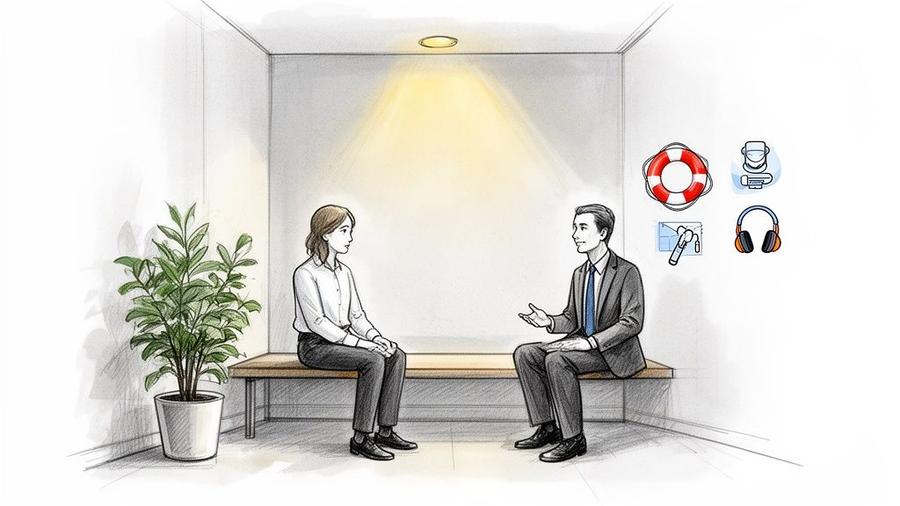
- A Quiet Break Area: Find a small, quiet space away from the floor where an employee can go to decompress for a few minutes. This simple act shows you recognize their need for a mental reset during a crazy shift.
Beyond creating a supportive workplace, empowering individuals is crucial. People can get a handle on their own exhaustion by learning practices like these actionable self-care strategies for burnout. Making sure your team knows about resources like this gives them tools to manage their own well-being.
Practical Mental Health Support Initiatives
To make this even more tangible, here’s a breakdown of initiatives you can implement, ranging from low-cost, high-impact actions to more significant investments in your team’s health.
Ultimately, championing mental health means building a workplace where people feel seen, heard, and supported as whole human beings. When your team knows you genuinely care about them beyond the work they do, their loyalty, engagement, and resilience skyrocket. That creates a healthier, stronger culture for everyone involved.
Your Questions About Preventing Burnout, Answered
Rolling out new strategies to tackle burnout always brings up good questions. You want to know your efforts will actually work, that your team will get on board, and that it makes sense for the business. Let's get into the common questions I hear from hospitality leaders so you can move forward with confidence.
Where Should I Start if My Budget Is Limited?
Good news: you do not need a huge budget to make a real difference. Some of the most powerful moves against burnout are about changing culture and process, not buying expensive perks.
Focus on the low-cost, high-impact stuff first.
- Open Up Communication: Start holding quick, regular check-ins. Asking a simple question like, “What’s one thing that would make your shift easier?” costs nothing but can uncover major friction points you can actually fix.
- Make Recognition a Habit: Put up a "kudos" board in the breakroom. Start every pre-shift meeting with a shout-out for someone who crushed it. This builds morale and proves you are paying attention.
- Fix Your Schedule: Take a hard look at your schedules for toxic patterns like "clopening" shifts and get rid of them. It’s a simple policy change that shows you respect your team's well-being and costs absolutely zero dollars to implement.
These are not small things. They build a foundation of psychological safety, which is where any real burnout prevention strategy has to start.
How Do I Get Buy-In from Senior Leaders or Owners?
When you are making your case to the people in charge, speak their language: money and risk. Burnout is not just a "people problem"; it is a direct threat to the bottom line.
Frame your pitch around hard business metrics. Use data to draw a straight line from high staff turnover, absenteeism, and sloppy service to the real costs of burnout. For instance, studies show that burned-out employees are 2.6 times more likely to be actively job hunting.
Do the math. Calculate the cost to replace just one or two key employees—think recruitment ads, hiring bonuses, and weeks of training time. Then, put that number next to the tiny cost of a preventative initiative. The conversation shifts from an "expense" to a smart investment in keeping the operation stable.
What if My Team Resists These Changes?
I get it. Change, even when it’s for the better, can be met with a healthy dose of skepticism. If your team is used to a high-stress, "that is just how it is" environment, they might be wary.
Transparency and consistency are your best tools here.
Start by explaining the "why." Let them know you have been listening to their concerns about the crazy workload and stress, and these changes are a direct response. Better yet, involve them in the process. Ask for their feedback and ideas.
When your team sees this is not just a flavor-of-the-month initiative but a real, sustained commitment to making their work lives better, trust starts to build. Consistency will win them over.
How Can I Measure the Impact of My Efforts?
You have to measure what you are doing. It’s the only way to know if it’s working, prove its value, and figure out what to do next. You can track both hard numbers and the softer, cultural shifts.
First, get a baseline before you start making changes. Then, keep an eye on these KPIs.
- Employee Turnover Rate: This is the big one. If fewer people are quitting, you are on the right track.
- Absenteeism: Track unscheduled absences and call-outs. When those numbers drop, it is a sign of a healthier, more engaged team.
- Pulse Surveys: Use short, anonymous surveys asking direct questions about stress, workload, and job satisfaction. Keep it simple and do it regularly.
- Floor Vibe: This is the qualitative stuff. Just listen. Are people complaining less? Is the energy more positive? This data is just as important as the numbers.
Tracking these metrics gives you a clear picture of what is working and helps you make smarter decisions to keep improving your culture.
Ready to build a stronger, more resilient team? MAJC is the community-driven platform designed by hospitality operators for hospitality operators. Access expert-led training, proven templates for scheduling and retention, and a peer network to help you solve your biggest challenges. Run a smarter, more profitable business today.